Design and decoration of small gastronomic establishments
19/01/2024 [Updated on 05/05/2026]
In the restaurant industry, small restaurants have a charm that makes them unique. However, decorating small restaurants isn't always an easy task, as they require a special approach to maximize their potential.
What will you learn in this article?
- Small Restaurant Design: Tips and Essentials
- Decorating Trends for Small Restaurants
- Small Café Design
- Decorating Small Fast-Food Restaurants
- Small Restaurant Decorating Ideas: Get Inspired by Krion
Design of small restaurants: Tips and essentials
Truly efficient interior design for small restaurants begins with an understanding of their structure and form. Whether square, rectangular or round, the space must comply with a number of basic details.
The counter or bar, as a key element of any restaurant, should be located in a way that optimises workflow and interaction with customers. And the furniture must be designed to offer maximum functionality without sacrificing on style.
Interior design for small restaurants
With the above aspects in mind, let's take a closer look at some of the interior design elements that will be of great use in restaurants with limited space.
Spatial distribution: Maximising functionality
Distribution in a small restaurant is key. We need to keep in mind the shape of the premises in order to strategically locate the counter and service areas, maximising the available space.
To optimise layout and functionality, multifunctional furniture and modular designs can be an effective solution.
Design and distribution of spaces in a real cafeteria
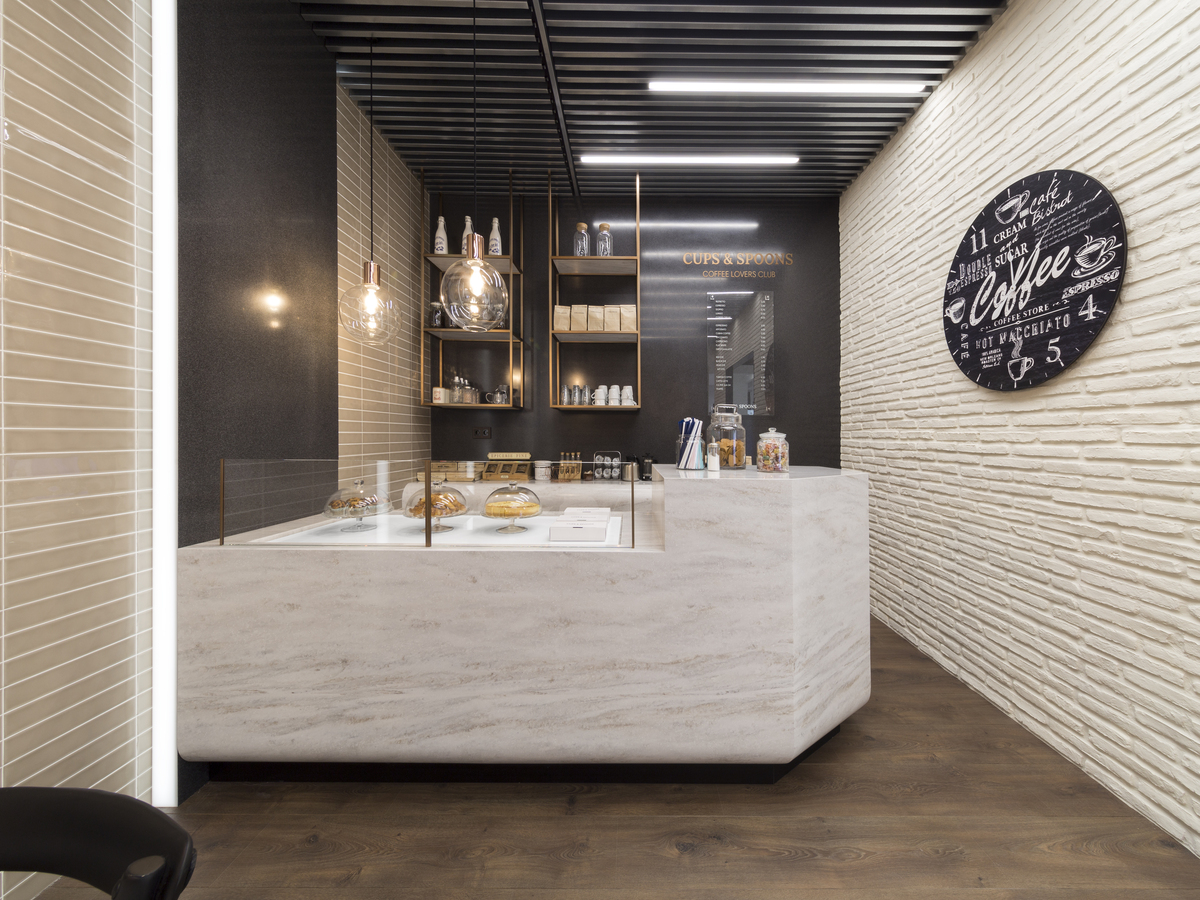
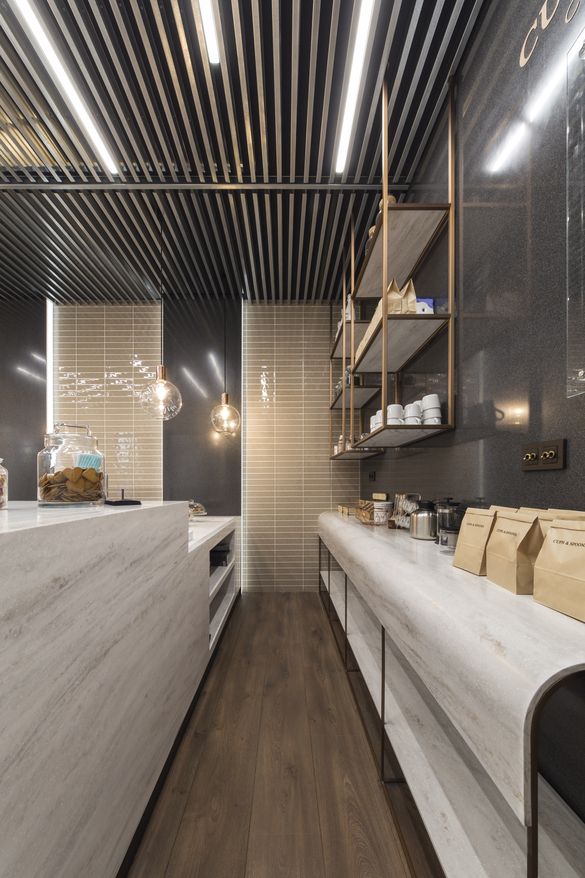
In case you find it useful, we share a real example of a design we created for a cafeteria project in Panama. Take a look at the plans and the final result:
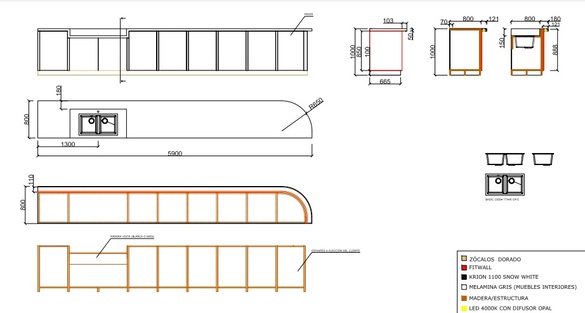
Front plan for cafeteria design
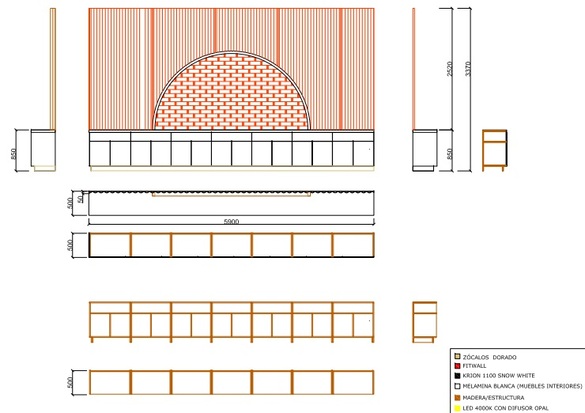
Rear plan for cafeteria design
When lines come to life:
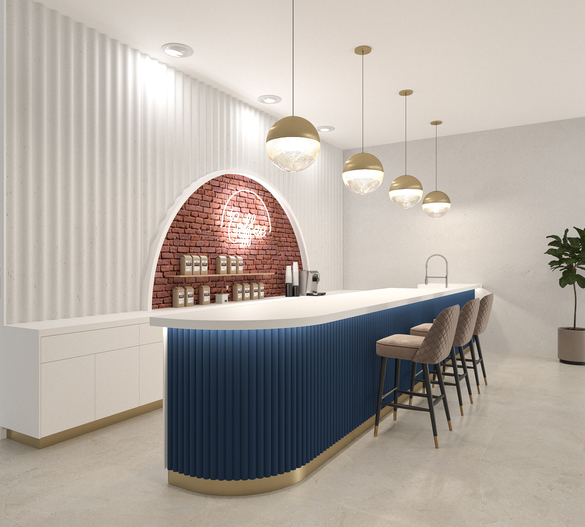
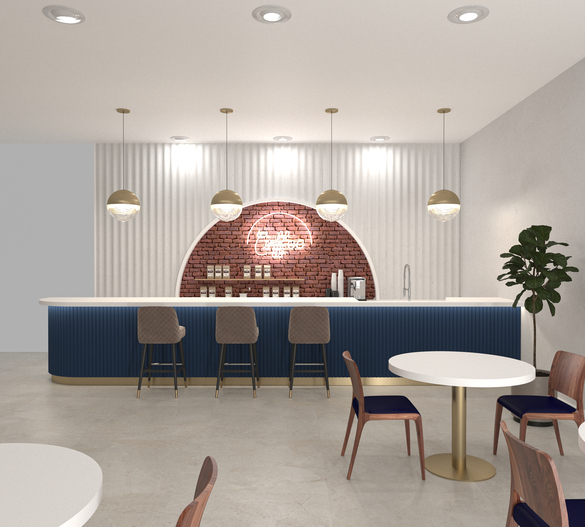
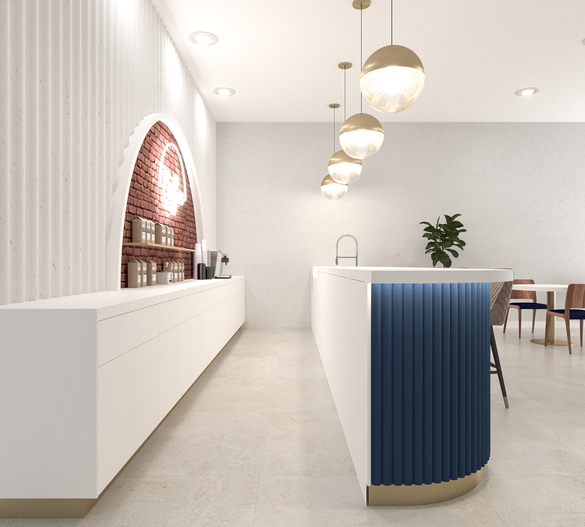
In this type of project, one of the biggest challenges is accommodating various needs within a small footprint: customer service, product display, circulation, storage, and a visual identity that reinforces the business’s personality. That’s where good design goes beyond mere decoration to become a strategic tool.
In a small café, the counter often takes center stage. It serves not only as a service point but also as an organizing element for the space. It defines pathways, establishes visual hierarchies, and can help separate functions without the need for partitions.
In addition to the floor plan, there’s another resource worth maximizing: the walls. In compact spaces, vertical surfaces offer enormous potential for both decoration and storage. Often, the solution isn’t adding more furniture, but making better use of what we already have.
Walls allow for the introduction of decorative elements that add personality without taking up usable floor space. A textured covering, a graphic composition, or a relief design can reinforce the business’s identity and create a striking visual impact right from the entrance.
At the same time, they can also serve as functional supports for shelves, niches, bookcases, or small storage units. This helps keep other areas of the space uncluttered and enhances the sense of order.
In a small café, making vertical use of space is particularly useful for:
- Freeing up floor space;
- Keeping traffic flow unobstructed;
- Incorporating storage without cluttering the space;
- Displaying products or decorative elements thoughtfully.
When these decisions are integrated from the start of the project, the result is much more natural. The space looks more balanced, more professional, and better designed. And that has a direct impact on both operations and the customer experience.
Suitable furniture: Style and comfort in smaller spaces
When choosing furniture, more than its style, it is necessary to consider its functionality and how it fits into the space. Opt for light and small furniture to provide flexibility and visual spaciousness.
Strategic lighting: Creating ambience and highlighting spaces
Well-planned lighting is essential. Make the most of natural light and use artificial light to create a warm and cosy atmosphere, while highlighting the interior design and decoration with integrated lighting in the bar and strategic areas.
Using Light Colors to Create a Sense of Space
When it comes to decorating small restaurants, color is one of the most effective tools for transforming the perception of space. You don’t need to physically expand the space to make it feel more open. Sometimes, the right color choice can achieve that effect immediately.
Light colors, such as off-white, beige, sand, soft gray, or stone tones, reflect light better and create a visual sense of greater spaciousness. This is especially useful in establishments with little natural light, low ceilings, or a narrow layout.
That said, working with light tones doesn’t mean ending up with a cold or characterless space. The key is to build a bright, serene foundation and then introduce nuances that add character. Statement lighting, textiles, dark woodwork, or small pops of color can bring the space to life without overwhelming it.
To achieve a balanced effect, the following approach usually works well:
- Use light colors on walls and ceilings;
- Reserve bold tones for specific details;
- Maintain a consistent color palette throughout the space;
- Combine the neutral base with warm materials.
Natural materials fit particularly well into this approach. Light wood, mineral finishes, and organic textures help prevent the space from feeling overly flat. They bring a sense of warmth, comfort, and a much more human character.
It’s also important to remember that color choices should align with the business’s identity. A specialty coffee shop, a casual restaurant, or a fast-food concept don’t project the same personality. The color palette should complement the brand story and reinforce the experience we want to convey.
Use empty spaces for storage
In a small restaurant, storage often becomes one of the biggest challenges. When not properly addressed, clutter quickly sets in: visible utensils, blocked walkways, an overcrowded counter, and a general sense of improvisation that affects both internal operations and the establishment’s image.
That’s why, rather than adding furniture just for the sake of it, it’s better to identify empty spaces that can be transformed into useful storage without sacrificing floor space. Often, the best solutions don’t take up more floor space but instead make use of corners, heights, and nooks that usually go unnoticed.
Walls are a key resource. With lightweight shelves, niches, suspended modules, or well-integrated shelving, we can gain storage capacity without visually cluttering the space. Bench seating with interior storage, counters with hidden compartments, or cabinet fronts designed to store daily essentials also work very well.
There are several areas that warrant special attention:
- The counter or bar front;
- The space under benches and fixed seating;
- Recesses or corners between pillars;
- The upper part of the walls;
- The spaces under countertops and side tables.
These solutions help keep the restaurant’s main areas uncluttered. And in a small space, that makes a big difference. The cleaner the space appears, the more comfortable and professional it feels.
Additionally, integrating storage from the start of the project allows it to become a natural part of the design. It doesn’t feel like an afterthought. It doesn’t disrupt the aesthetic. On the contrary, it helps create a tidy and cohesive look.
In the hospitality industry, order isn’t just an internal matter. It also communicates. A customer may not notice every detail, but they do sense whether the space conveys harmony, control, and care. And all of that often starts with having a well-thought-out plan for where we store what we need.
Cozy atmospheres and balanced design
One of the greatest appeals of a small restaurant is its ability to foster a sense of intimacy. But for it to become a pleasant experience, the atmosphere must be well-balanced. Creating a cozy atmosphere isn’t about filling the space with decorative elements. Nor is it about following a trend without considering the actual space. What works best is building an atmosphere where everything is in balance: materials, color, lighting, circulation, and acoustics.
In a small restaurant, every decision carries more weight. Too many textures, too many colors, or too many objects compete with each other and create visual noise. On the other hand, when there is a clear hierarchy, the space feels more open, and the customer perceives it immediately.
To achieve that welcoming effect, it’s best to rely on some basic principles:
- Maintain a consistent aesthetic;
- Combine warm materials with practical surfaces;
- Create specific focal points rather than overdecorating;
- Carefully consider lighting to suit each function;
- Pay attention to acoustic comfort and circulation.
Lighting is once again crucial here. A welcoming atmosphere requires layers of light. General lighting should be sufficient but not intrusive. Accent lighting can enhance intimacy at specific tables or highlight design elements, such as a bar or special cladding. The balance lies in creating atmosphere without sacrificing functionality.
Materials also play a significant role. Textured surfaces, natural tones, and seamless solutions typically create a warmer, more serene feel. And if these materials are also durable, hygienic, and easy to maintain, the design gains long-term value.
We must not forget user comfort. A welcoming restaurant must also be comfortable for sitting, conversing, and moving around. Customers need some privacy, even if the space is small. And the staff needs to be able to work efficiently. When both aspects are well addressed, the space truly works.
Decoration trends for small restaurants
Current trends in small restaurant decoration emphasise the creation of intimate and cosy spaces. The use of light, neutral colours helps to create a sense of spaciousness, while accents of colour can bring the space to life.
Natural materials and organic textures are also popular for their ability to add warmth and character. In addition, local art and decorative elements can be very useful to personalise the space and connect with the community.
Design of small cafés
As in restaurants, it is essential to optimise space in small cafés. Efficient furniture layout, the selection of pieces that combine style and functionality, and well thought-out lighting are key to creating a welcoming ambience.
It can also be very useful to introduce decorative elements such as Fitwall® cladding. In addition, just because a space is small doesn't mean you need to give up on brand identity, which can be reinforced by customising the space with Alluslate® panels.
Decoration of small fast food restaurants
If you are faced with the challenge of decorating a very small fast food restaurant, you should keep in mind that efficiency and functionality are your two best friends. But this doesn't mean you should give up on aesthetics.
The decoration should be based on lighter colours to visually enlarge the space, introducing white lights to obtain an effect of spaciousness. At the same time, energetic decorative details in bright colours can give the space a modern and fun touch that encourages action and movement.
When choosing materials, opt for alternatives such as Krion® LUX, whose versatility and mouldability allow you to design a space that facilitates the efficient flow of customers and employees alike.
Decoration ideas for small restaurants: Get inspired by Krion
Krion has been offering innovative solutions for the decoration of small restaurants and cafés for years. Fitwall® and Alluslate® decorative panels, as well as Krion® solid surface are ideal for creating unique and attractive spaces that meet the unique needs of each restaurant.
→ Here you can see how to apply Krion® in the catering industry.
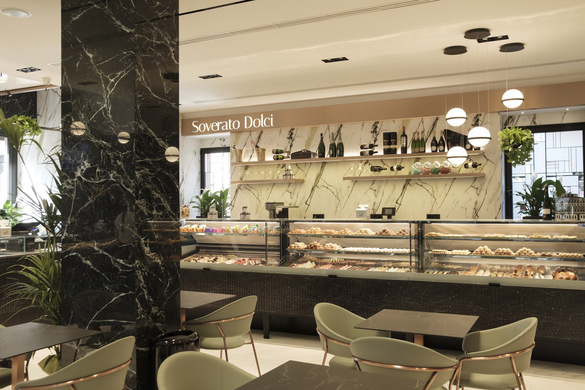
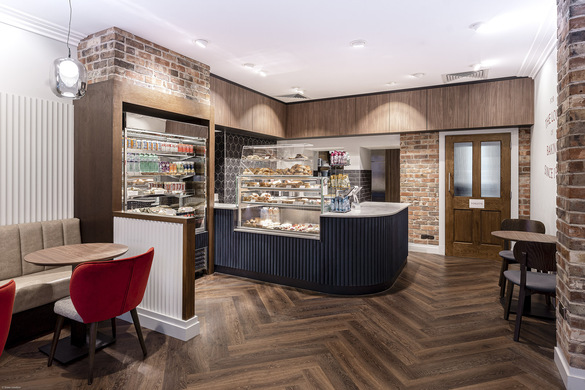
If you face the task of decorating a small restaurant, we hope these tips will help you! Remember: a small space can be warm and welcoming if you choose the right colours, textures, lighting and furniture.
,