White kitchen ideas for 2026
06/05/2026
White kitchens continue to play a leading role in interior design projects. This is no coincidence. Their ability to reflect light, visually soften a space and adapt to a wide range of styles makes them a solution that is as aesthetically pleasing as it is functional. In 2026, moreover, we are seeing a clear evolution: it is no longer simply a matter of choosing white units, but of creating warmer, more cohesive spaces.
In this context, materials, finishes and layout take on decisive importance. A well-designed white kitchen can convey order, spaciousness and sophistication. However, it must also stand up to daily use, be easy to clean, and offer strength and durability. That is why, in this article, we share ideas, combinations and professional criteria for designing white kitchens that are not only beautiful, but also comfortable and built to last.
What will you learn in this article?
- Why choose a white kitchen
- Types of white kitchen designs
- White kitchen design ideas
- Which is better for a kitchen: a matt or gloss finish?
- White kitchens in the hospitality sector: impeccable design and durability with Krion® LUX
Why choose a white kitchen?
Choosing a white kitchen in 2026 is establishing itself as a design tool for professionals. Its value lies in acting as a highly reflective neutral canvas, facilitating the transition between complex textures and fine materials without overwhelming the composition. In both the hospitality sector and luxury residential settings, white ensures lasting aesthetic coherence, allowing the architecture of the space to take centre stage and adapt to future alterations without losing its original sophistication.
Visual spaciousness in compact spaces
One of the greatest virtues of white kitchens is their ability to make a space appear larger. White softens visual boundaries, reduces the feeling of clutter and promotes a more seamless overall look. In small kitchens, this makes a real difference.
When working with limited space, every decision counts. Smooth fronts, integrated handles and seamless surfaces reinforce that sense of spaciousness. It also helps to maintain a restrained colour palette and avoid excessive contrasts in very compact areas.
In linear or L-shaped kitchens, white furniture helps reduce the visual weight of tall units. This allows the kitchen to ‘breathe’ more easily. The result is a lighter, more serene atmosphere, without compromising on storage capacity.
Light
White acts as a multiplier of the light output in a space, an essential property in property developments where the capture of natural light increases the value of the asset. This reflectance capability raises the standard of liveability and the perceived spaciousness in every room, regardless of the façade’s orientation.
In cutting-edge design, this foundation is integrated with layered technical lighting systems —integrated LED profiles and indirect solutions— that emphasise the volumes and the quality of the materials. The result is an atmosphere of order and neatness that reinforces the project’s credibility, projecting a visual sophistication that is decisive in both residential marketing and the hospitality sector experience.
Versatility to transform the space
The white kitchen stands out for its high adaptability, allowing for constant aesthetic evolution without the need to alter the structural envelope. This versatility is a critical factor in a project’s lifecycle, as it ensures the design is not subject to fleeting trends, maintaining its long-term commercial relevance.
The architecture of white furniture allows for immediate visual reconfiguration by updating peripheral elements:
- Fittings and opening systems: transition to groove profiles or designer handles.
- Materials and textures: integration of open-pore woods or stone surfaces to add organic warmth.
- Metal accents: renewal of taps and light fittings in brushed, copper-toned or matt black finishes.
- Accent furniture: incorporation of pieces that redefine the style towards a more contract or residential approach.
This design flexibility ensures the project stands the test of time, increasing the property’s market value and allowing the space to adapt to the changing demands of the user or the property market.
Types of white kitchen designs
The versatility of white lies in its ability to suit various architectural styles, from compact layouts to open-plan designs with large-format islands. More than just a finish, it acts as a unifying thread that brings visual coherence to the layout, regardless of its complexity.
Project planning must prioritise the analysis of the functional programme, assessing three key areas: usable floor space, circulation flows and the required storage capacity. Under this premise, white allows for balanced compositions where the architecture is subordinate to the user experience.
Small white kitchens: minimalist design tips
Small white kitchens call for visual order. Here, minimalism is not just a trend. It is a design strategy. The cleaner the overall look, the greater the sense of space.
Some approaches work particularly well:
- White kitchen units with smooth fronts
- Built-in tall units to conceal appliances
- Light-coloured or continuous worktops
- Open shelving in certain areas
- Linear lighting to enhance depth
- Few, carefully selected decorative elements
It is also advisable to use materials that are easy to clean and resistant to daily wear and tear. In small spaces, everything stands out more. That is why surface quality matters so much. A non-porous, uniform and repairable material such as Krion® LUX helps keep the kitchen in better condition for longer.
White kitchens with an island
White kitchens with an island are one of the most sought-after designs. They make a statement, organise the space and encourage a more social kitchen experience. The island can be used for cooking, food preparation, breakfast or storage.
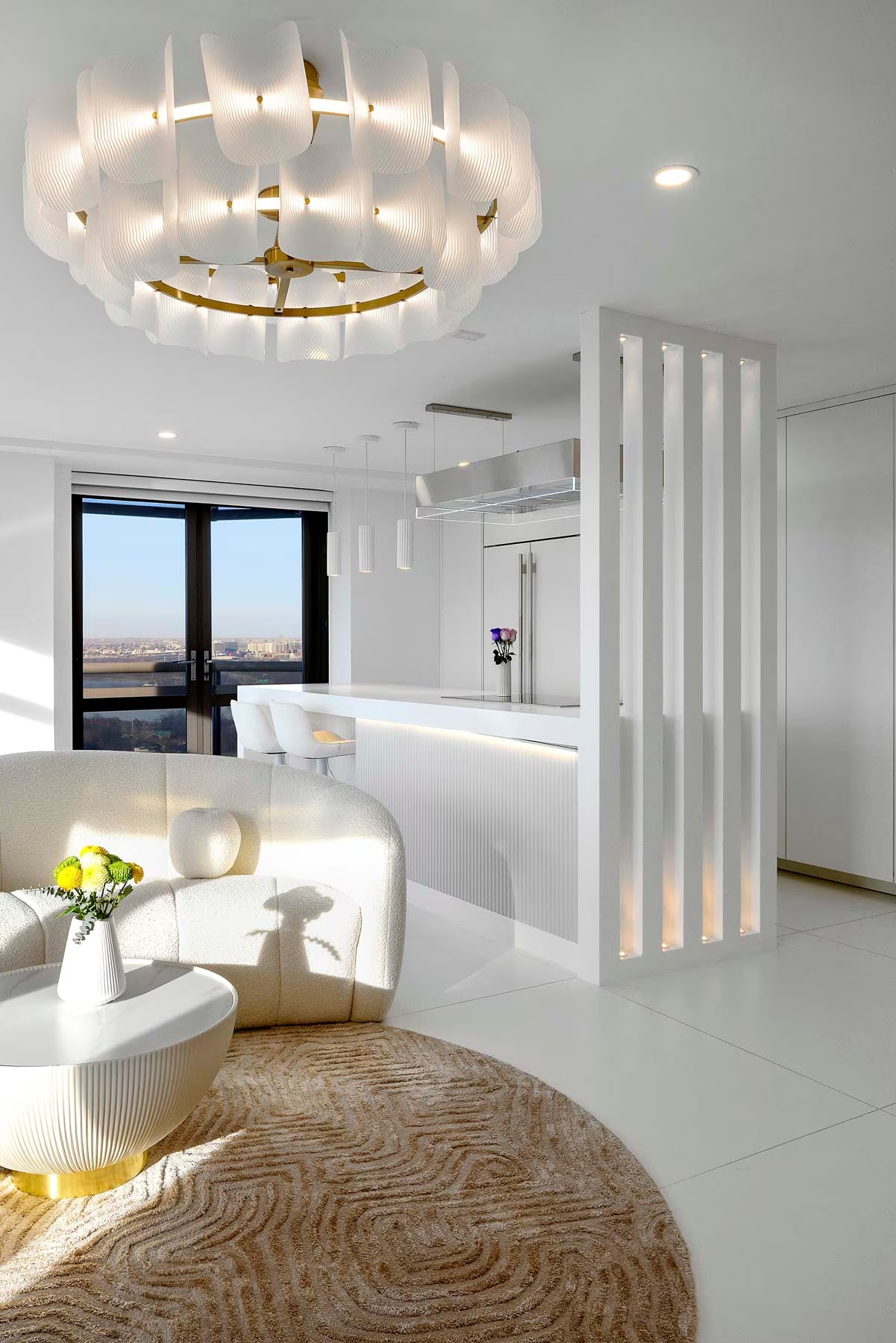
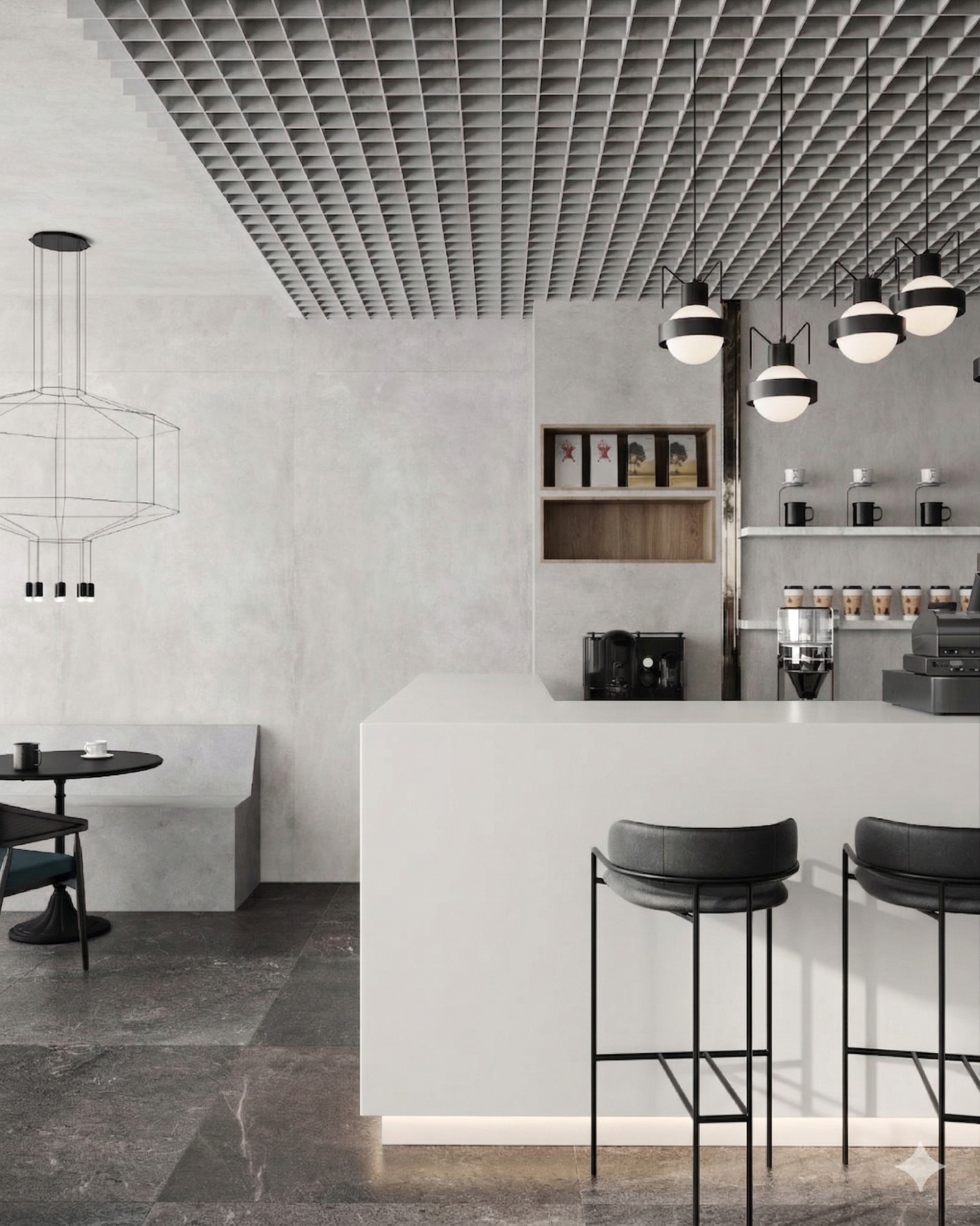
Project: Pinnacle Condominium
However, it is not always the best solution. For it to work, there must be plenty of space to move around it. An island that is the wrong size can make everyday use difficult. That is why, in professional design, the size of the unit and the distances around it are just as important as the aesthetics.
In a white kitchen, the island can become the focal point. We can keep it white to enhance continuity or introduce contrast with a dark worktop, a wooden base or a unique material. In both cases, the visual balance must be carefully considered.
L-shaped and linear designs to optimise workflow
L-shaped and linear layouts remain among the most effective, particularly in urban homes. They allow storage, preparation and cooking areas to be organised clearly. This improves workflow and avoids unnecessary movement.
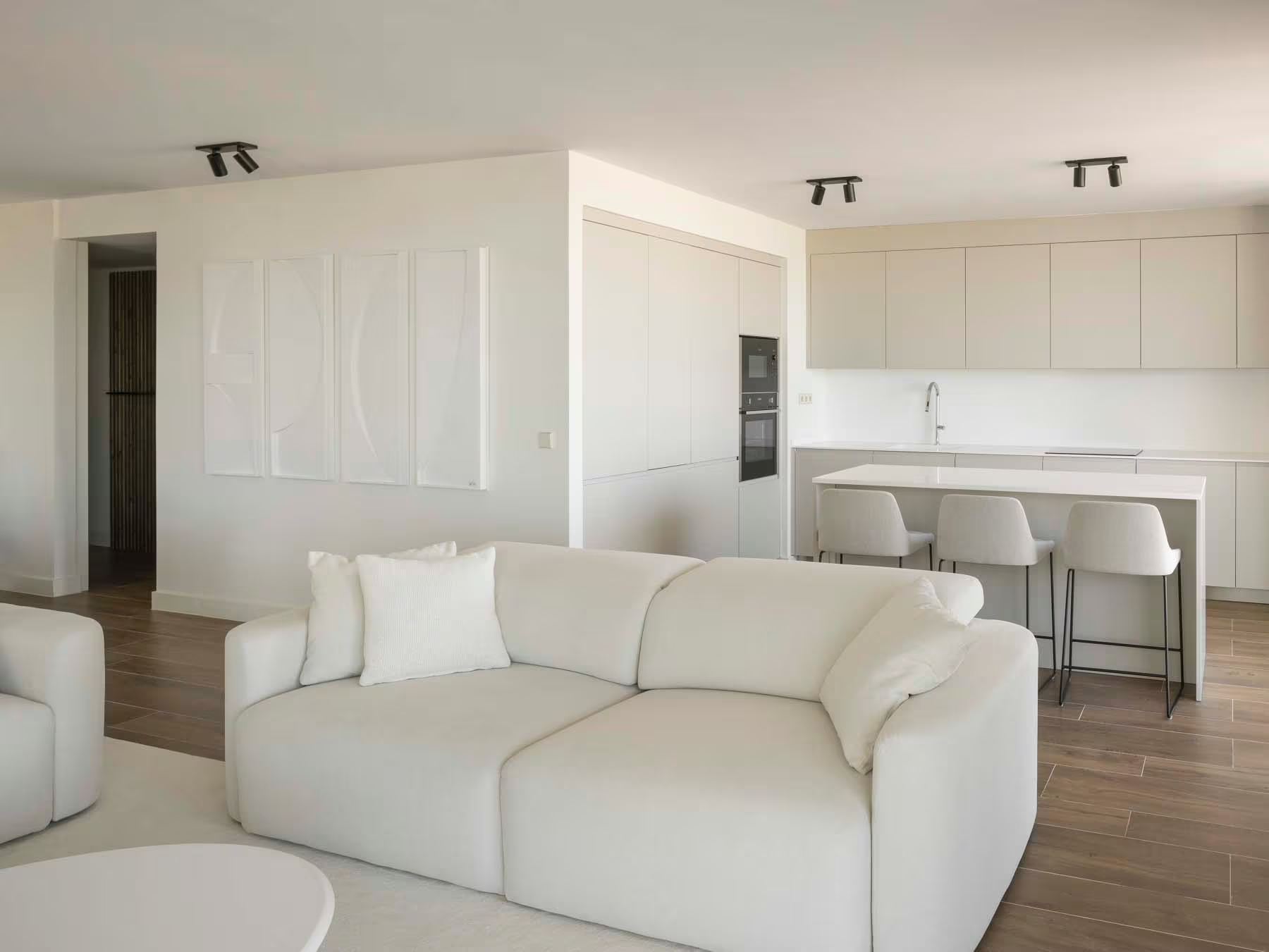
Project: Ikon Penthouse 28
In linear kitchens, white helps to lighten the entire frontage. It is an excellent choice in spaces that open onto the living room. The kitchen blends in more naturally and does not impose a heavy presence on the living area.
In L-shaped layouts, the corner is used to gain worktop space and storage capacity. If white kitchen units and a serene colour palette are also used, the overall look is cleaner and more cohesive.
White kitchen design ideas
The design of a white kitchen in 2026 goes beyond mere colour composition to focus on creating a holistic atmosphere. The key to the project lies in tactile materials, the continuity of surfaces and the dialectic dialogue between elements—factors that define the character and exclusivity of the space.
Below, we analyse the most groundbreaking combinations for 2026. These proposals allow the kitchen to be imbued with its own identity through the curation of textures and finishes, whilst maintaining the aesthetic rigour and visual spaciousness demanded by the high-end sector.
White and wood kitchens: the balance between modernity and warmth
The integration of wood stands out as the key element for adding warmth to the white kitchen. Its role is to break the potential coldness of the monochromatic scheme, providing a tactile materiality and a rich texture that humanises the space without sacrificing visual purity.
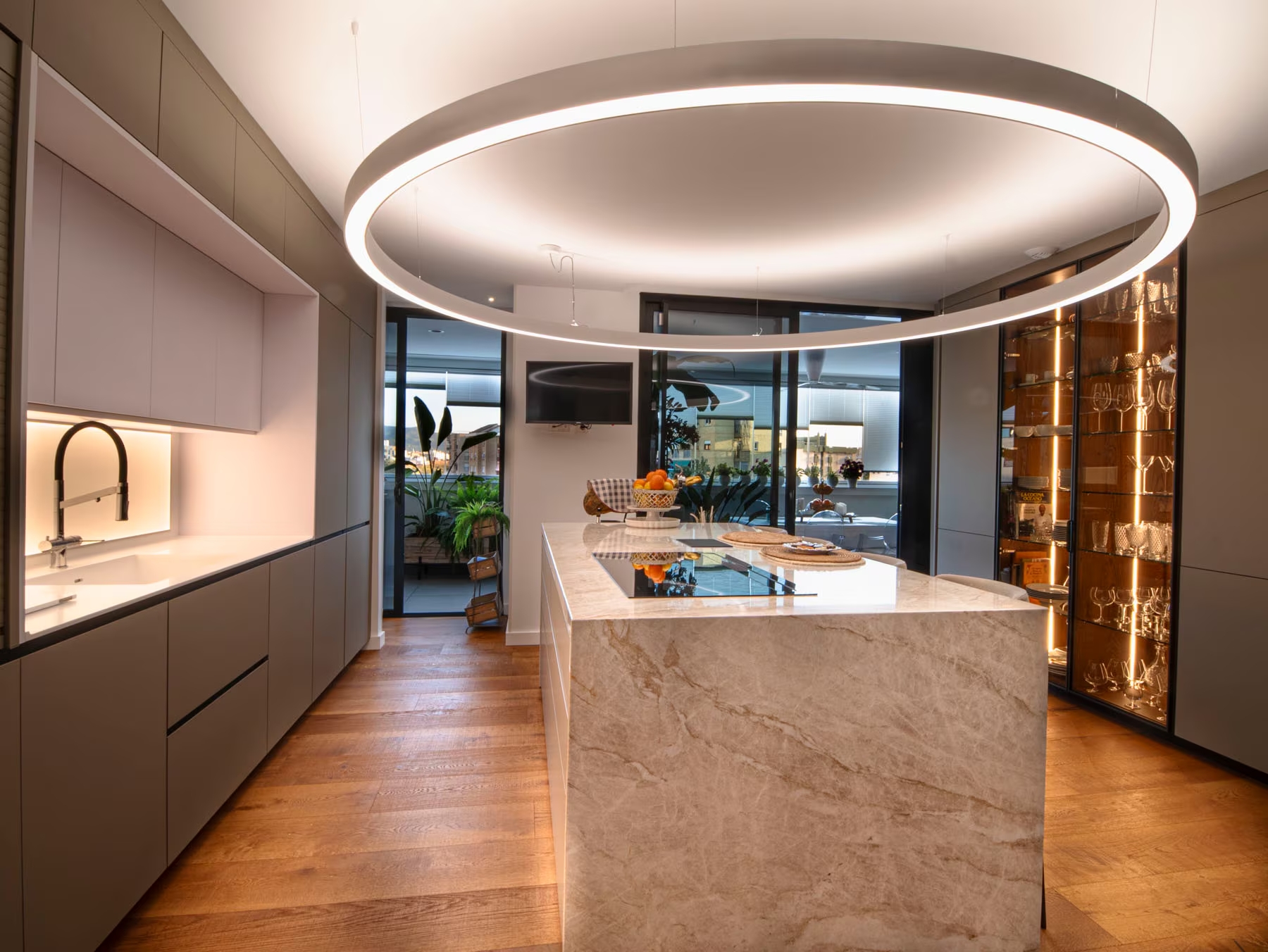
Project: AS Home
White and wood kitchens work particularly well in these settings:
- Nordic-inspired homes
- Kitchens opening onto the living room
- Warm and inviting family spaces
- Minimalist projects in need of texture
The use of wood should be seen as a strategy for creating accents: from panelled units to open shelving. By 2026, the trend is moving towards the use of open-grain woods and neutral tones with linear grain patterns. Combining these with white worktop finishes creates a beautifully balanced composition that enhances the perceived quality of the entire space.
The touch of luxury: white with marble or veined stone worktops
Choosing a veined worktop is a way to introduce depth and dynamism into a white kitchen. The use of surfaces with pronounced veining breaks up the chromatic uniformity of the horizontal plane, providing a visual texture that raises the project’s quality standard without the need for ornamental elements.
The decision must be based on the material’s performance. To ensure the project’s long-term viability, it is essential to opt for non-porous surfaces that withstand heavy use, stains and thermal abrasion.
One way to maximise the impact of this material is to extend the worktop onto the splashback using a single piece. This technical approach eliminates joints in the work area and creates a visually solid block that facilitates hygiene and reinforces the perception of a high-end kitchen.
Seamless, ultra-hygienic white kitchens with Krion
In kitchen design for 2026, hygiene and durability are established as key design principles. The use of Krion® Solid Surface allows for the creation of surfaces with zero porosity and imperceptible joints, a critical advantage that eliminates dirt build-up and facilitates daily maintenance. Its bacteriostatic nature guarantees a sterile environment, making it the ideal technical solution for the hospitality and luxury residential sectors.
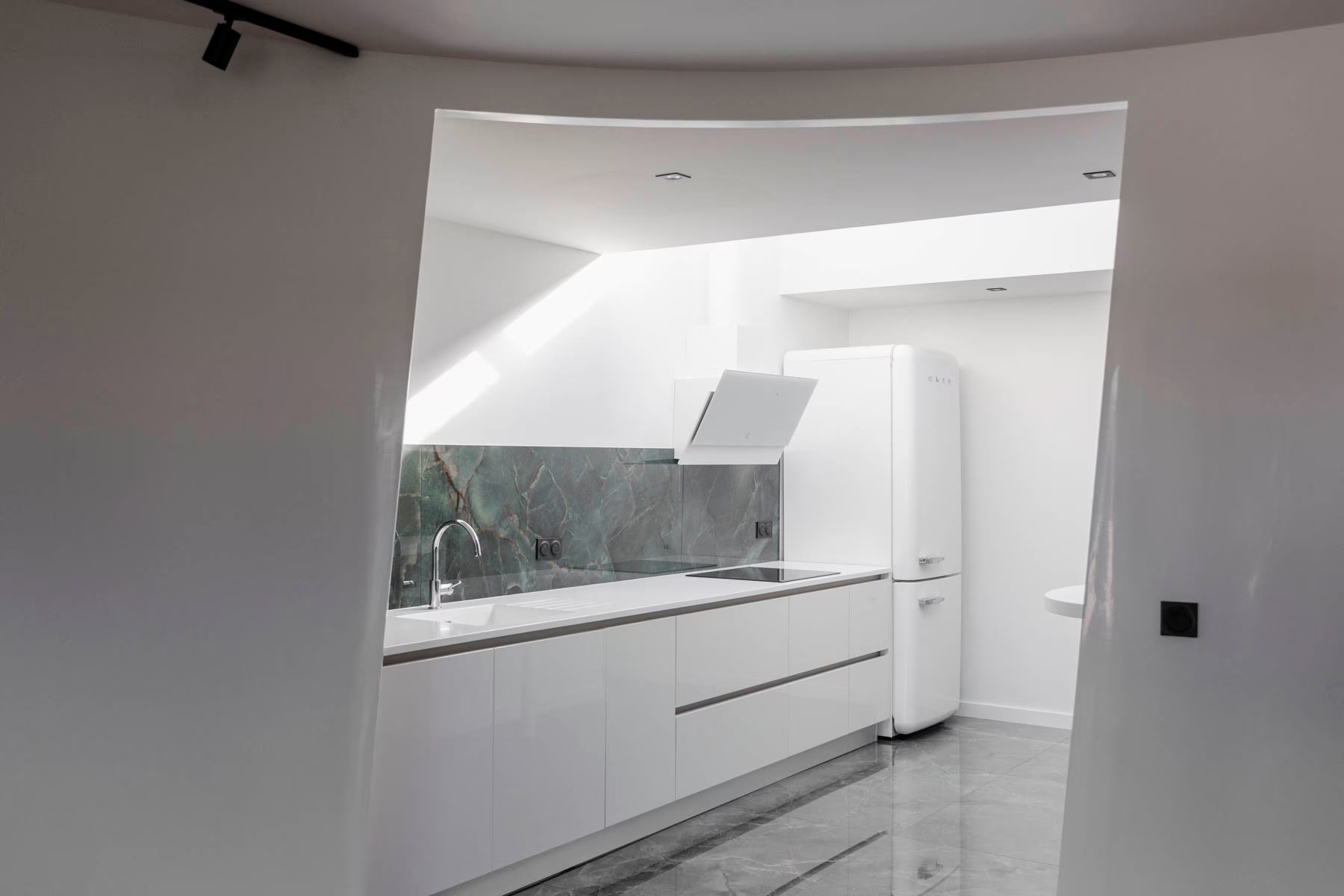
Project: Résidence Baraud
As it is a material that is uniform throughout its thickness, it allows the sink to be integrated into the worktop to create a single, seamless surface. This feature eliminates breaks in the work area, making cleaning easier and ensuring that the surface can be repaired or restored in the event of any surface damage without losing its original appearance.
White kitchens and black worktops: the contrast that never fails
The combination of white units and a black worktop remains a fundamental design element for bringing hierarchy and structure to the kitchen. Whilst white ensures a sense of spaciousness and light, the black surface provides a visual anchor that defines the geometry of the space and lends a sophisticated character to the project.
This formula is particularly effective in kitchens with clean lines, where the worktop emphasises the horizontal nature of the design. To balance the starkness of this contrast, the design must rely on transitional elements:
- Lighting systems: the use of warm colour temperatures to soften the harshness of the contrast.
- Organic materials: the incorporation of wood in strategic places to humanise the composition.
- Consistency of finishes: the combination of ultra-matt surfaces on both planes projects an aesthetic of understated, contemporary luxury.
The key for the specifier lies in the management of textures. A black worktop with a silky finish reduces unnecessary reflections and reinforces the visual continuity of the whole, ensuring a timeless aesthetic that suits both cutting-edge residential settings and hospitality projects with a distinct identity.
Which is better for a kitchen: a matt or gloss finish?
The choice of finish for a white kitchen must be based on an analysis of the space’s photometry and the intended use of the property. High-gloss surfaces act as light amplifiers, making them an effective solution in small-scale projects where the aim is to maximise depth through light reflection. However, this finish requires more precise management of specular reflections and the visibility of fingerprints, factors that can affect the aesthetics in high-traffic environments.
Conversely, the current trend in the luxury residential and hospitality sectors leans towards ultra-matt finishes with a silky feel. These surfaces offer a more serene and sophisticated aesthetic, eliminating light saturation and providing a visual uniformity that better conceals the marks of everyday use.
During the specification phase, the decision must take into account the incidence of natural light, the kitchen’s functional layout and the level of maintenance required. In 2026 projects, the optimal solution often lies in the hybridisation of textures: combining matt fronts with more reflective elements to create subtle contrasts that enrich the design’s volume without compromising its formal balance.
White kitchens in the hospitality sector: impeccable design and durability with Krion® LUX
In the hospitality sector and the contract market, the kitchen or service area must withstand constant use, where durability and ease of disinfection are priorities. White is prescribed in these environments as a functional solution that guarantees perceived hygiene and facilitates the detection of residues, ensuring the space always maintains an impeccable and professional appearance.
The choice of non-porous materials is crucial for meeting hygiene standards without compromising the establishment’s aesthetics. In this regard, the use of Krion® LUX allows for the creation of seamless surfaces, eliminating the points where dirt usually accumulates.
Furthermore, in holiday apartments, a well-designed white kitchen acts as an asset that adds value to the property. By using highly durable materials that retain their colour and structure over time, the need for frequent renovations is reduced, ensuring that the investment retains its visual and functional appeal from day one.
Frequently asked questions about white kitchens
Which worktop colour goes best with a white kitchen?
The choice of worktop finish defines the visual hierarchy of the space. For projects requiring contrast and depth, black or dark-toned surfaces structure the composition. If the aim is to enhance organic warmth, wood or natural stone textures are the ideal complement. However, to maximise reflectance and visual continuity, light-coloured mineral surfaces ensure a monochromatic environment that expands the perception of space.
How can I add warmth to a white kitchen so it doesn’t look cold?
To avoid the coldness associated with pure white, the key lies in combining materials. Introducing wood in strategic places, using technical lighting with warm colour temperatures and incorporating metallic or black accents helps to humanise the room. It is not a question of cluttering the space, but of carefully curating textures to provide environmental comfort without compromising the rigour of minimalist design.
Are white kitchens difficult to clean?
There is a perception that white makes maintenance more complex, but the reality depends on the porosity and uniformity of the surface. White kitchens crafted from Krion LUX® offer superior hygiene efficiency thanks to their low porosity, which prevents stains from penetrating the material, unlike other porous surfaces.
The key to this material lies in its ability to create surfaces with imperceptible joints, eliminating critical points where residue accumulates. Furthermore, its bacteriostatic nature ensures a consistently sterile environment. This combination of factors simplifies cleaning protocols and ensures that the ultra-white finish remains unchanged despite intensive use, offering exceptional durability.