Solid Surface vs Granite: which is the best material?
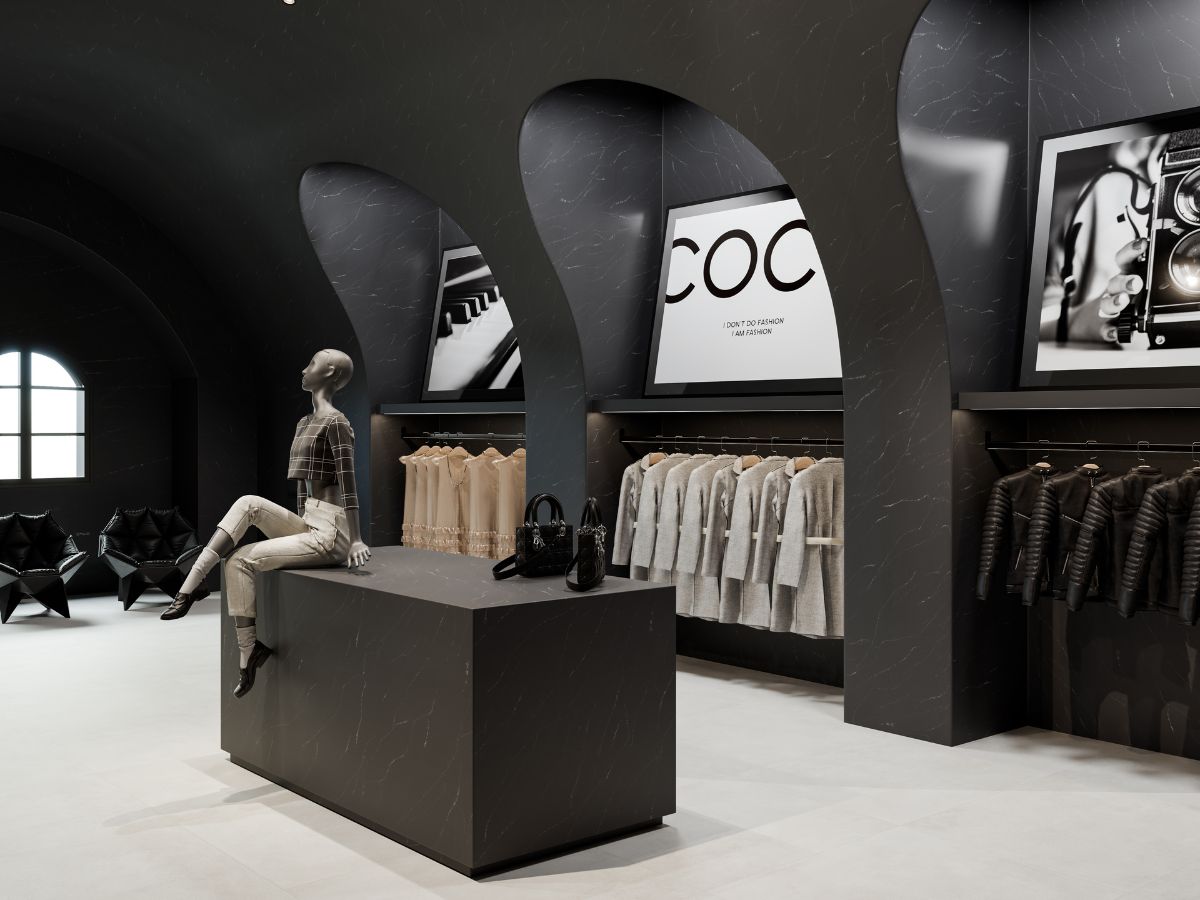
02/12/2025 [Updated on 16/12/2025]
In contract, commercial or healthcare projects, selecting the right material for surfaces goes beyond appearance: it is essential to consider its performance, sustainability, adaptability to design and ease of long-term maintenance. Both solid surface and granite are widely used options in architecture and interior design, but which one best suits the requirements of a professional project?
What will you discover in this article?
- What is solid surface and what is granite?
- Advantages of solid surface
- Recommended applications
- Design and customisation aspects
- Maintenance and durability
- Summary of the comparison
- Which material to choose for your project.
What is solid surface and what is granite
Choosing between solid surface and granite begins with understanding what each material is and how it is manufactured. Although both are durable, high-performance materials, their compositions and technical properties vary considerably.
Composition and manufacture of solid surface
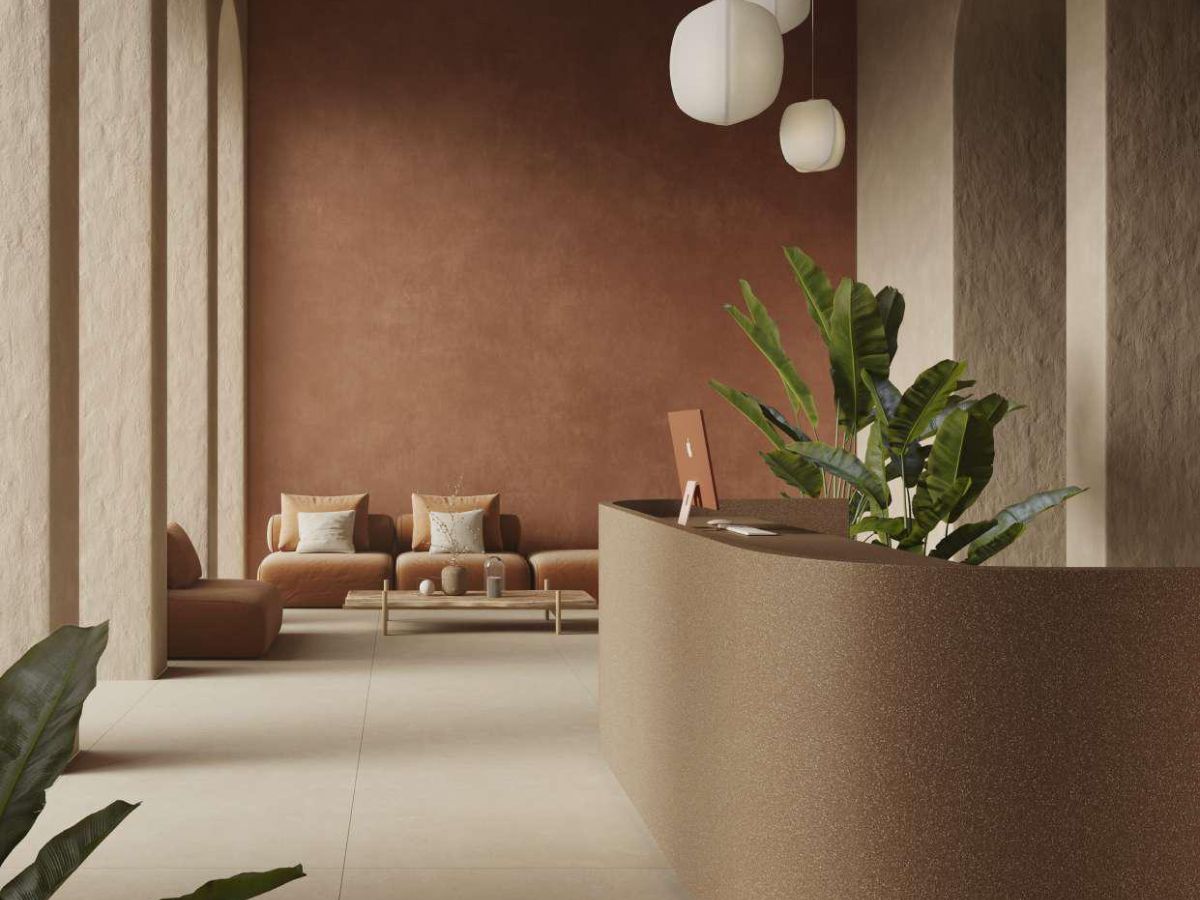
Solid surface, such as Krion® LUX, is obtained by combining alumina trihydrate—a mineral derived from bauxite—with acrylic resins, creating a homogeneous mass. This composition guarantees stable, compact sheets with almost zero porosity, with a uniform distribution of colour, texture and technical properties throughout their thickness.
Thanks to this manufacturing process, each sheet can be worked as a continuous unit: it can be cut, sanded, joined and thermoformed without altering its tone or density. Its composition makes the material fire-resistant (classification B-s1, d0), free of VOC emissions and fully suitable for spaces with sanitary requirements, such as hospitals, laboratories or catering environments.
Composition of granite
Granite, on the other hand, is a natural rock composed mainly of quartz, feldspar and mica. Its manufacturing process involves cutting large blocks of rock to obtain slabs that are then polished and adjusted to the required size. Granite is known for its strength and durability, but its manufacture does not allow for the same flexibility as solid surface. Granite surfaces have visible joints, which can affect the aesthetic continuity of the design.
Although granite is resistant to scratches, high temperatures and chemicals, its natural porosity means that it requires periodic sealing treatments to prevent liquid absorption and the proliferation of bacteria. This can be a challenge in applications where hygiene is crucial, such as in hospitals or commercial kitchens.
Advantages of solid surface
In any professional project, evaluating the strengths of a material is essential to ensure its long-term performance. Below, we break down the advantages of solid surface compared to other materials:
- Visual continuity: as a non-porous material, solid surface allows for joints without visible seams, creating monolithic surfaces that are ideal for wet or high-traffic areas.
- Hygiene: with its bacteriostatic properties, it prevents the proliferation of microorganisms.
- Repairability: it has excellent resistance to small cracks, and surface damage or scratches can be easily restored by sanding, extending its useful life without replacing parts.
- Thermoforming: it can be moulded into curves, making it an excellent solution for wraparound designs or adaptations in custom designs and projects.
- Aesthetic stability: it is highly resistant to exposure to moisture or UV light.
- Aesthetic variety: it offers a wide range of colours and finish options, including options for backlighting.
- Zero moisture absorption: its compact and homogeneous structure prevents the penetration of liquids, making it easy to clean and maintain, even in high-traffic areas such as bathrooms, kitchens and public areas.
Recommended applications
Both solid surface and granite have specific applications where they excel. Below, we explore the sectors and areas where each is most suitable.
Solid surface in countertops, bathrooms and custom furniture
Solid surface excels in applications that require continuous, precision surfaces with a high level of customisation. It is particularly suitable for environments such as public bathrooms, powder rooms, or shared kitchens. In addition, it is ideal for projects that require custom furniture or architectural elements, such as bars and counters with specific geometries, as well as corporate furniture, where visual consistency is crucial to maintaining the identity of the space.
Comparison by sector: hospitality, retail and contract
-
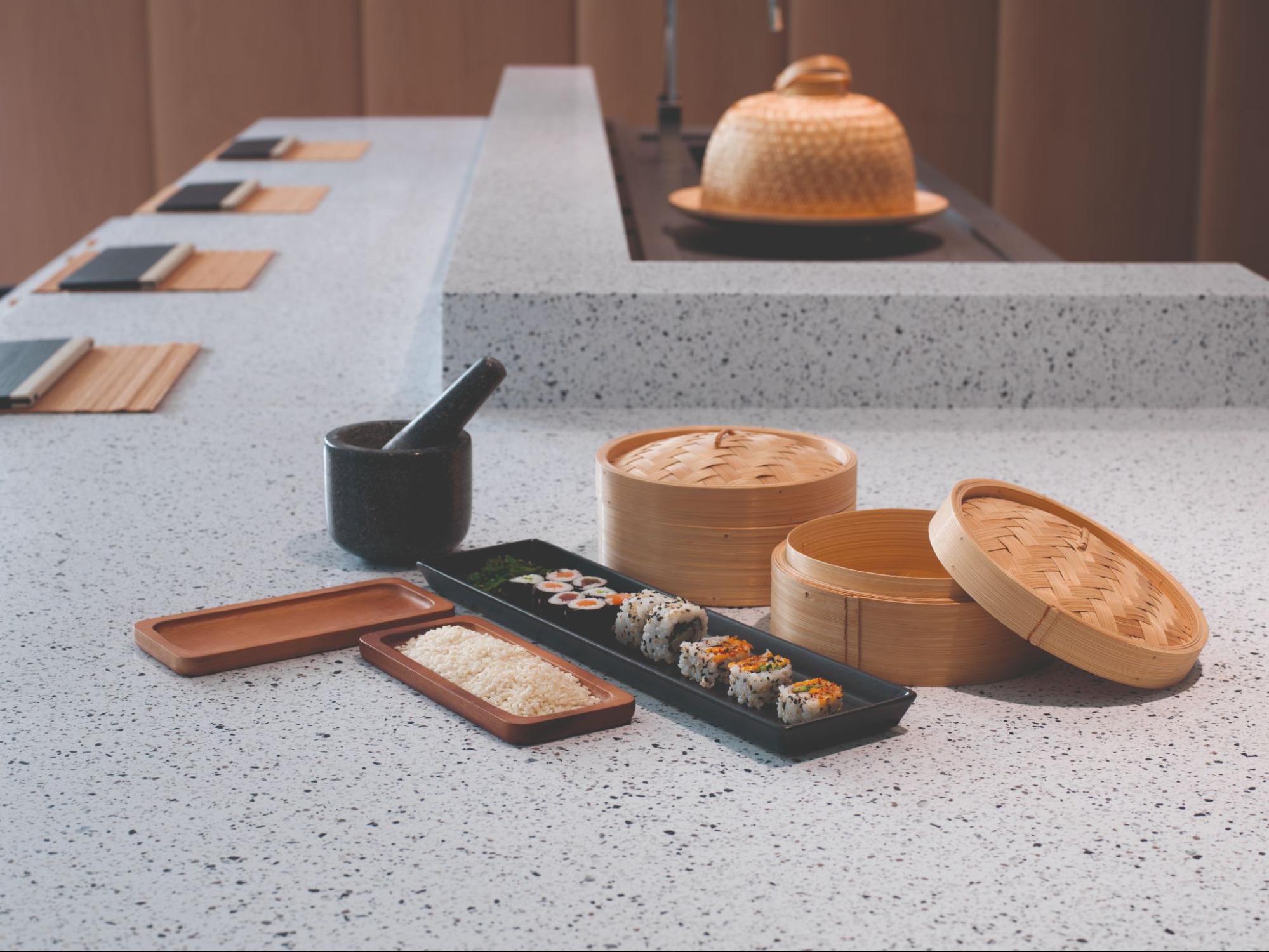
Hospitality: in environments with intensive cycles of use and cleaning, it is crucial to have materials that maintain their appearance without deteriorating over time. Granite, unlike solid surface, does not allow for quick interventions or discreet repairs, which means that in the event of damage, replacements must be planned in advance to avoid interruptions in activity.
- Retail and corporate spaces: in projects where visual identity and customisation are essential, such as franchises, solid surface stands out as the most versatile and adaptable option. Unlike granite, which offers a more fixed aesthetic, solid surface allows for total customisation, making it easy to create unique designs that reflect the essence of the brand or corporate space.
- Contract (healthcare, education, transport): In these types of projects, it is essential that materials withstand high traffic and intensive cleaning requirements. Solid surface, due to its durability and ease of maintenance, offers an effective long-term solution for these environments, ensuring the necessary hygiene and resistance.
Design and customisation aspects
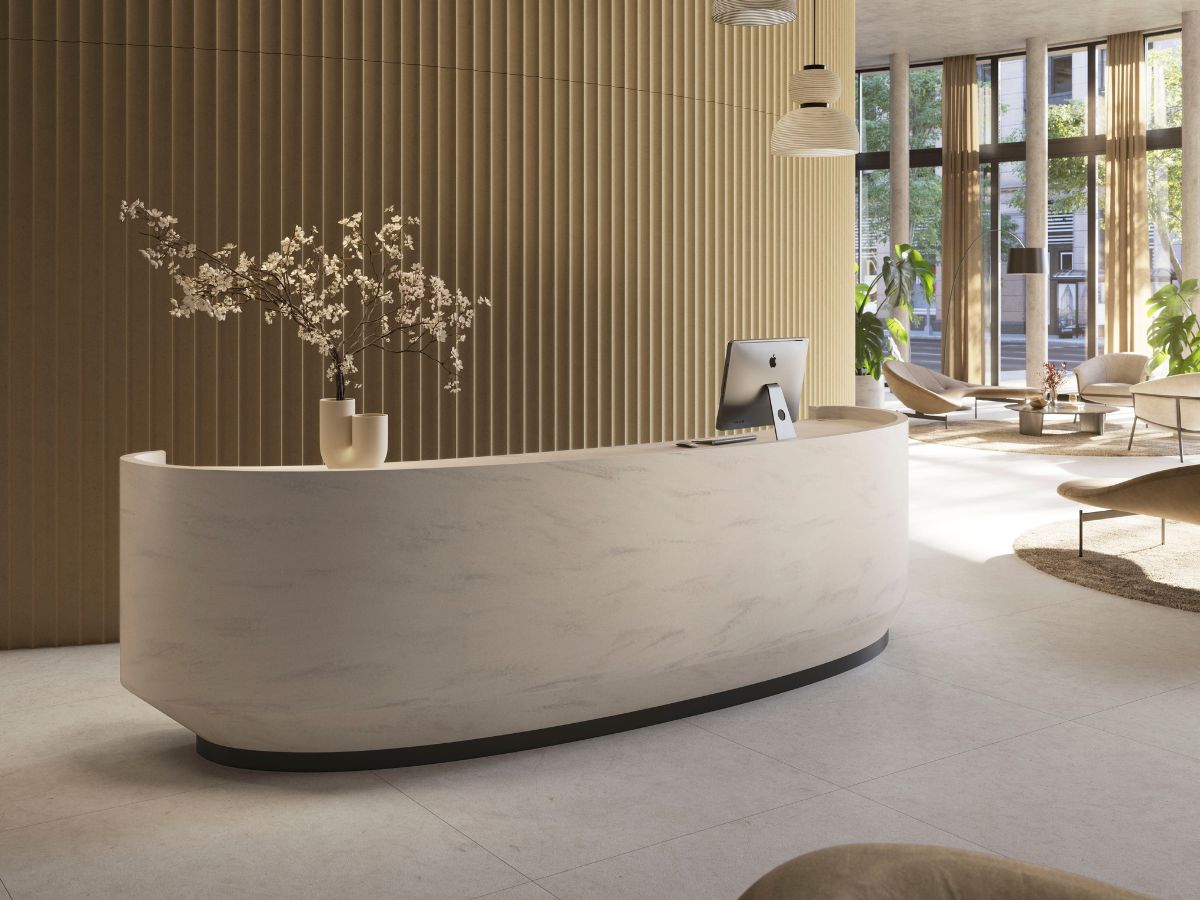
One of the strengths of solid surface is its design versatility. Unlike granite, which has a limited range of finishes and predefined patterns, solid surface allows for complete customisation of surfaces, adapting to the aesthetic and functional requirements of each project.
Creative possibilities withn solid surface
Gracias a su composición homogénea y a la capacidad de ser termoformado, el solid surface ofrece la posibilidad de crear superficies curvas, cantos suaves o diseños envolventes. Además, las opciones de retroiluminación permiten incorporar efectos de luz innovadores que no son posibles con otros materiales como el granito.
Maintenance and durability in real use
In terms of durability, both materials offer excellent resistance to wear and tear, but with significant differences in terms of maintenance.
Solid surface stands out for its ease of maintenance. Its non-porous surface prevents the absorption of liquids and reduces the risk of stains. In addition, in the event of damage, the material can be repaired locally without the need to replace the entire piece.
Granite, on the other hand, although very resistant, can be susceptible to liquid penetration if not properly sealed. Furthermore, although it is resistant to scratches and heat, any damage to the surface generally requires replacement of the entire piece, which can result in higher operating costs and downtime.
Summary of the comparison between solid surface and granite
|
Aspect |
Solid Surface |
Granite |
|
Composition |
Aluminum trihydrate + acrylic resins |
Natural rock (Quartz, feldspar, mica), variable structure |
|
Structure |
Homogeneous throughout the thickness |
Variability in texture and pattern between pieces |
|
Porosity |
Virtually zero |
Porous, requieres regular sealing to prevent absorption |
|
Thermoforming |
Yes, allows bending and adaptation to all types of shapes |
Cannot be thermoformed, limited to straight cuts. |
|
Reparability |
Local repairs possible |
In case of extreme damage, requires complete replacement. |
|
Aesthetics and colour |
Wide variety of colours, translucent and backlit options |
Limited range, based on natural patterns |
|
Visual continuity |
Imperceptible joints |
Requires visible joints at the seams |
Which material to choose according to your project and professional profile?
For professionals such as architects, interior designers and planners, selecting the right material goes beyond aesthetics. Solid Surface stands out for its ability to adapt to a wide range of functional and creative requirements. Its versatility, which includes the ability to be thermoformed and worked as a continuous unit, facilitates the creation of customised surfaces that align perfectly with the concept of the space.
In projects where flexibility is key, such as in retail, offices, or hospitality, Solid Surface offers an ideal solution. Its ability to integrate with lighting, create curved shapes, and adapt to complex geometries offers a degree of design freedom that other materials cannot provide. This makes it an essential choice for projects that seek to stand out in both aesthetics and functionality.