Materials as sensations: the new language of design
20/02/2026
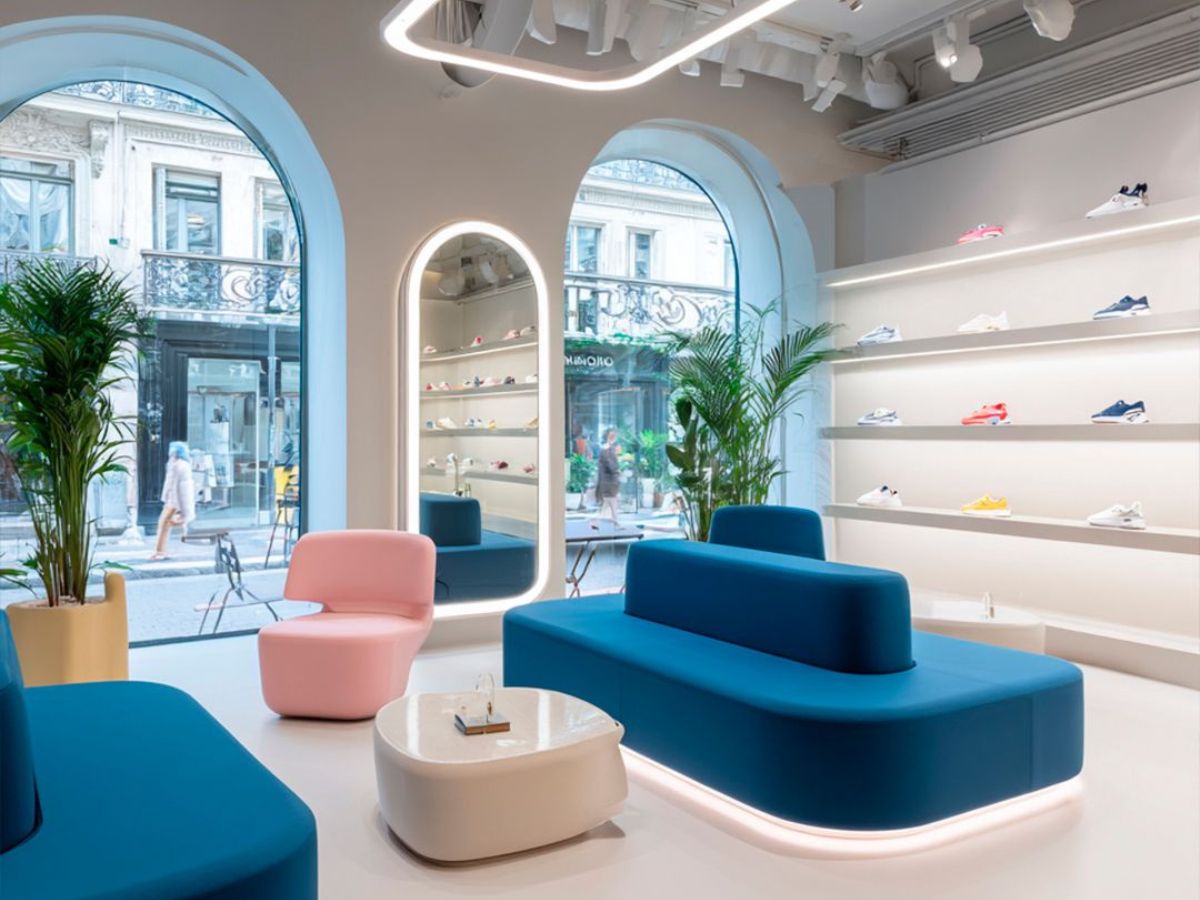
The selection of materials in an architectural project can no longer be limited solely to functional, technological or even aesthetic criteria. Sensory design, which has become established as a field of design in recent years, places human perception at the centre of the design process, implying that materials also respond to how users perceive space with all their senses—not just sight.
Beyond their mechanical, thermal or light properties, materials directly influence the spatial experience due to the way they interact with bodily sensations: texture, temperature, visual weight or the way a surface modulates light are decisive factors in the perception of a place.
From this perspective, talking about materials as sensations implies a view that considers materiality as an active tool for designing experiences, connecting meanings and responding to functional and strategic objectives within a space.
What will you learn in this article?
- From materiality to emotion: haptic design in contemporary architecture
- What materials convey in a space
- Sensory design: how materials activate the five senses
- Sensory marketing: when material drives business strategy
- The future of materials in interior design
From materiality to emotion: haptic design in contemporary architecture
Architecture has never been exclusively visual. Although contemporary culture has privileged the image, the spatial experience is, above all, bodily. In this sense, hapticity—understood as the tactile and kinesthetic dimension of space—introduces a more complex reading of materiality. It is not limited to direct physical contact, but encompasses the way the body perceives the density, scale, proximity and temperature of materials as it moves through the environment.
In this sense, haptic design is not about adding texture or superficial effects. It involves designing with the awareness that every material decision shapes a perceptual atmosphere. The continuity of a plane, the visual mass of a cladding, the absorption or reflection of light, the transition between surfaces... All of this constructs an experience that the user interprets even before rationalising it.
What materials convey in a space
In a market saturated with visual stimuli, physical space has established itself as a brand's most powerful strategic asset. It is no longer enough for a project to be functional or photogenic for Instagram; it must be consistent with the identity it represents and capable of communicating it instinctively. Here, materiality is not a finish, it is the message.
Before the user interacts with the product or service, their brain has already ‘scanned’ the environment. The choice of materials conditions that initial reading, sending signals about the status, trustworthiness or modernity of the place:
- Wood: various studies in environmental psychology show that natural-looking materials reduce the perception of stress and increase the feeling of comfort. Wood, due to its irregular texture and lower light reflectance, creates visually less aggressive environments than highly reflective surfaces. Its low thermal conductivity also makes it feel less cold to the touch compared to mineral or metallic materials.
- Metal: has high reflectance and thermal conductivity. These physical properties create a perception of precision and order associated with industrial or technological environments. In spatial perception studies, cold, reflective surfaces are associated with greater cognitive activation, although they can be perceived as less welcoming if they are overly predominant.
- Stone: has a high material density. In terms of spatial reading, heavy, low-reflectance materials convey stability and permanence. However, their porosity and the presence of visible joints can introduce visual fragmentation if not resolved with formal continuity.
- Textiles: from an acoustic point of view, textiles have sound absorption capacity, reducing reverberation. This directly influences the perception of comfort, as environments with less echo generate less cognitive fatigue. In addition, their soft texture activates a tactile response associated with physical comfort.
- Solid surface: introduces another logic. Its continuity without visible joints, its homogeneity and its ability to integrate complex shapes allow for the construction of clean, controlled and contemporary spaces.
Sensory design: how materials activate the five senses
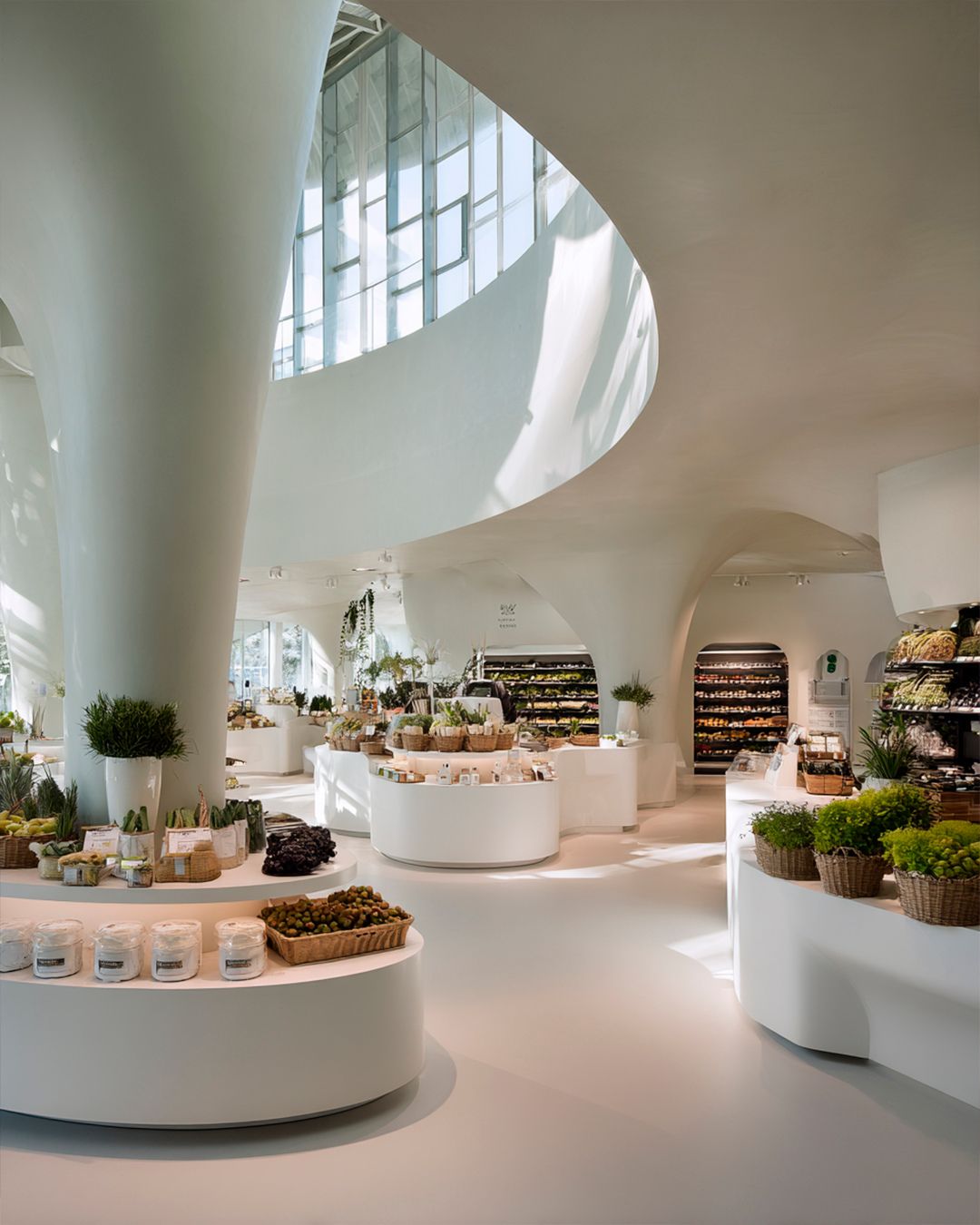
Sensory design is not an aesthetic trend. It is a strategy based on how humans process their environment. Various studies in environmental psychology and consumer behaviour show that the physical experience of space directly influences the length of stay, perception of quality and willingness to interact or purchase. Users do not consciously analyse each element, but their perceptual system does. In this context, materials act as sensory activators:
- Sight remains the dominant sense in spatial experience. Surface continuity, visual depth, and the way a material absorbs or reflects light condition how space is perceived. Homogeneous surfaces create a sense of order; materials with greater contrast or texture introduce dynamism.
- Touch intervenes even when there is no direct contact. The anticipated perception of temperature, density or softness is part of the unconscious evaluation of the environment.
- Acoustics are also linked to materiality. Excessively reflective surfaces can create reverberant environments that increase the feeling of stress, while materials with greater absorption contribute to comfort, which in commercial spaces is associated with prolonged permanence.
- Thermal perception does not depend solely on the air conditioning system. The nature of the material changes how the environment feels. Materials with greater thermal inertia or conductivity convey different sensations to the user.
- Even smell, although not directly related to structural material, is influenced by the choice of finishes and construction systems, especially in projects where the experience is immersive.
Sensory marketing: when material drives business strategy
The trends that are defining retail in 2026 point in a clear direction: physical space must offer something that digital cannot replicate. If online shopping is fast and efficient, the shop must provide interaction, connection and permanence. Omnichannel retailing has raised the standard of experience, and this requires the commercial environment to activate more than just sight. In this scenario, sensory marketing is establishing itself as a strategic tool.
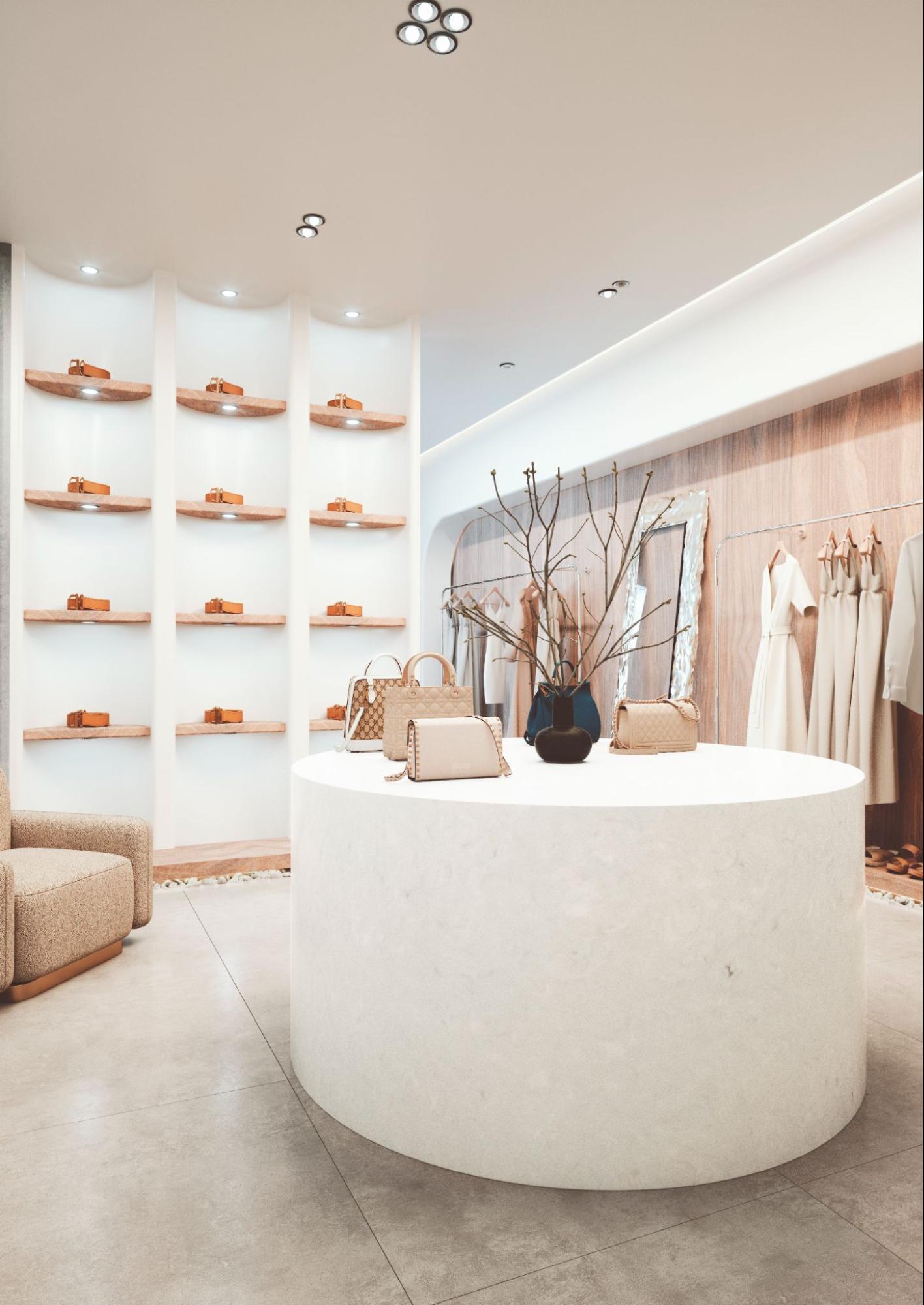
The shopping environment is no longer conceived solely as a functional space, but as an experiential landscape. Brands are working with textures, lighting, sound and smells to build a coherent atmosphere that reinforces their positioning. It is not a question of adding stimuli indiscriminately. It is about designing an immersive experience aligned with the brand identity.
The future of materials in interior design
Interior design is leaving behind the era of ‘patches’. For years, the process consisted of resolving the structure and then applying a covering to cover it. Today — and with increasing clarity — it is conceived as an integrated system where the material is simultaneously surface, technology and construction solution.
For a project to remain relevant in the coming years, the material must respond to three realities:
- The ‘death’ of the visual joint: the future is absolute continuity. Consumers no longer want to see where one element ends and another begins, nor do they want to see imperfections. Materials such as Krion® LUX allow for joints that are imperceptible to the eye, creating continuous surfaces that reduce bacteria accumulation points and facilitate maintenance, which is particularly relevant in healthcare projects.
- Surfaces capable of integrating light: physical space is evolving towards environments where light illuminates and communicates. In this context, backlighting becomes a tool capable of reinforcing a brand's identity, guiding routes or highlighting architectural elements. To be consistent, the material must allow for the controlled passage of light, such as Krion® LUX, which, thanks to its composition, enables backlit solutions.
- Real environmental commitment: Sustainability is no longer just about ‘recycling’. It also involves how the material is produced, what resources it incorporates and what industrial model supports it. In this sense, Krion's effort and commitment, together with the combination of Recycled Content Krion® and Ecocycle® technologies, allow us to move towards a more sustainable production model without compromising the quality or properties that characterise Krion® LUX. On the one hand, RC Krion® K·Life 1100, as well as the Luxury and Mud series, incorporate at least 5% recycled material from post-consumer waste. On the other hand, Ecocycle® is the system that allows the reincorporation of surplus material generated during the manufacture of the sheets. These scraps are transformed into recycled particles that are integrated into new solid surface sheets, retaining the same technical and aesthetic properties as the original product. In certain configurations, this process allows up to 40% recycled material to be incorporated.