How to make a hotel sustainable through conscious design
13/03/2025
In today's hotel sector, sustainability has gone from being a trend to becoming a necessity.
Making a hotel sustainable not only reduces environmental impact, but also improves the guest experience, adds value to the brand and generates significant long-term savings.
From the use of sustainable materials to the implementation of energy efficiency strategies, every decision counts when it comes to creating accommodation that respects the environment without sacrificing practicality and design.
What a sustainable hotel is like
A sustainable hotel is not only defined by energy efficiency, but also by the use of responsible resources, the integration of renewable energies and the use of ecological materials in its construction and design. These are some of the characteristics of a sustainable hotel:
- Energy efficiency: installation of LED lighting systems, motion sensors and renewable energy sources such as solar panels.
- Responsible water management: taps and showers with flow limiters, grey water recycling systems and technologies to optimise water consumption in swimming pools and common areas.
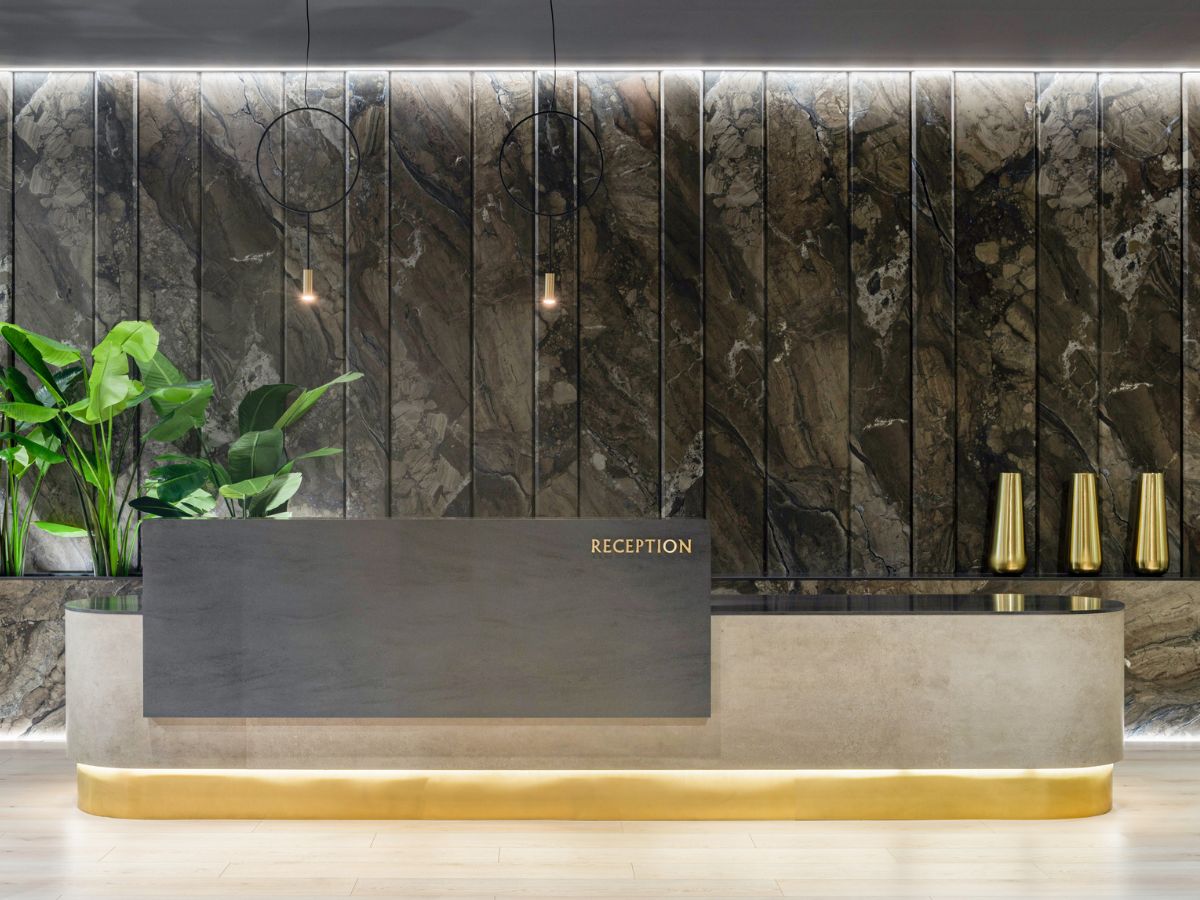
- Use of sustainable materials: From furniture to wall coverings, the choice of ecological and low-impact materials is essential. Krion® LUX, Krion® LINE, Krion Shell®, UNDORA®, Fitwall® and Alluslate® are examples of innovative solutions that combine sustainability and design.
- Promotion of recycling: Well-signposted areas for waste management and the use of biodegradable products in cleaning and maintenance.
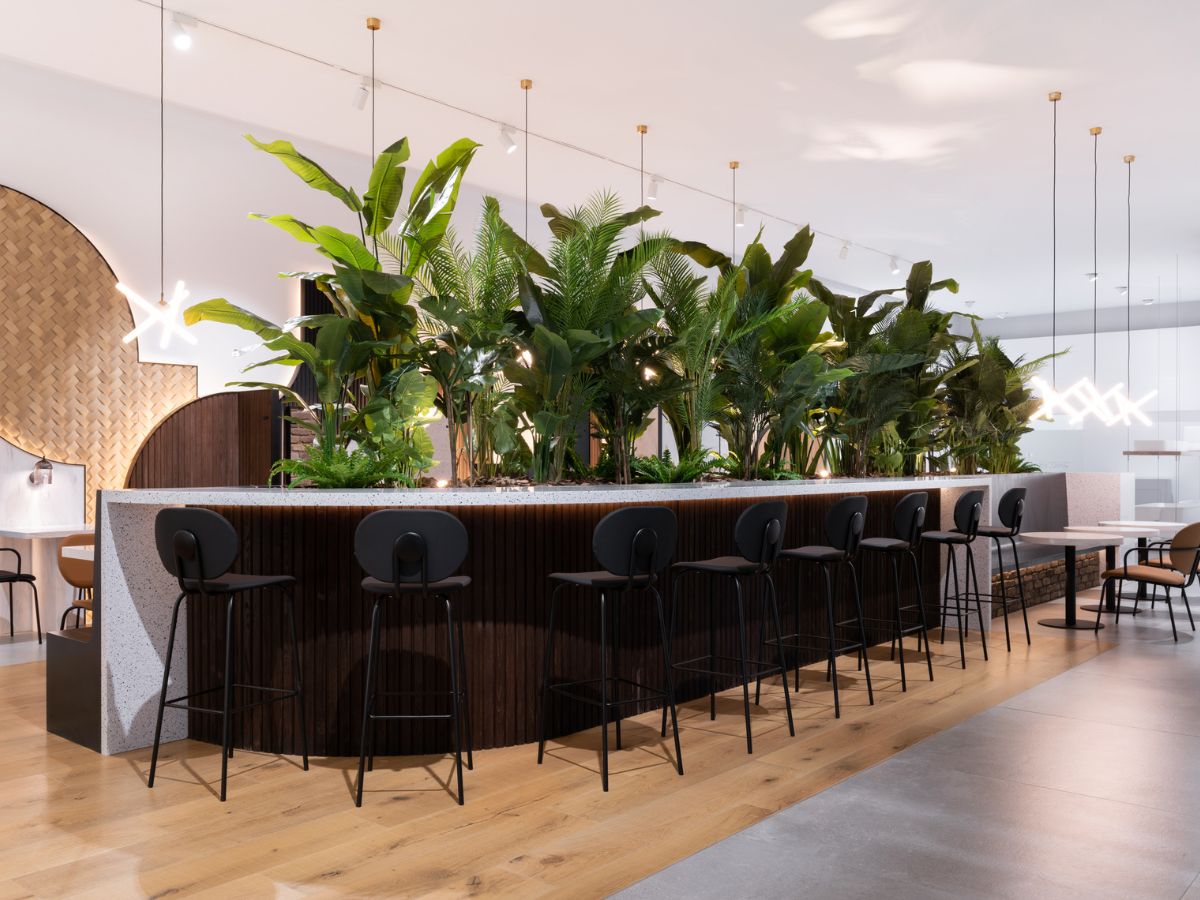
- Green spaces: Landscaped terraces, green roofs and green areas that improve air quality and the guest experience.
→ You may be interested in: How architecture can improve well-being with healthy buildings.
Strategies for turning a hotel into sustainable accommodation
Transforming a traditional hotel into a sustainable one requires planning and a comprehensive strategy that encompasses everything from construction to daily operations. Here are some key points:
1. Use of sustainable materials in the design
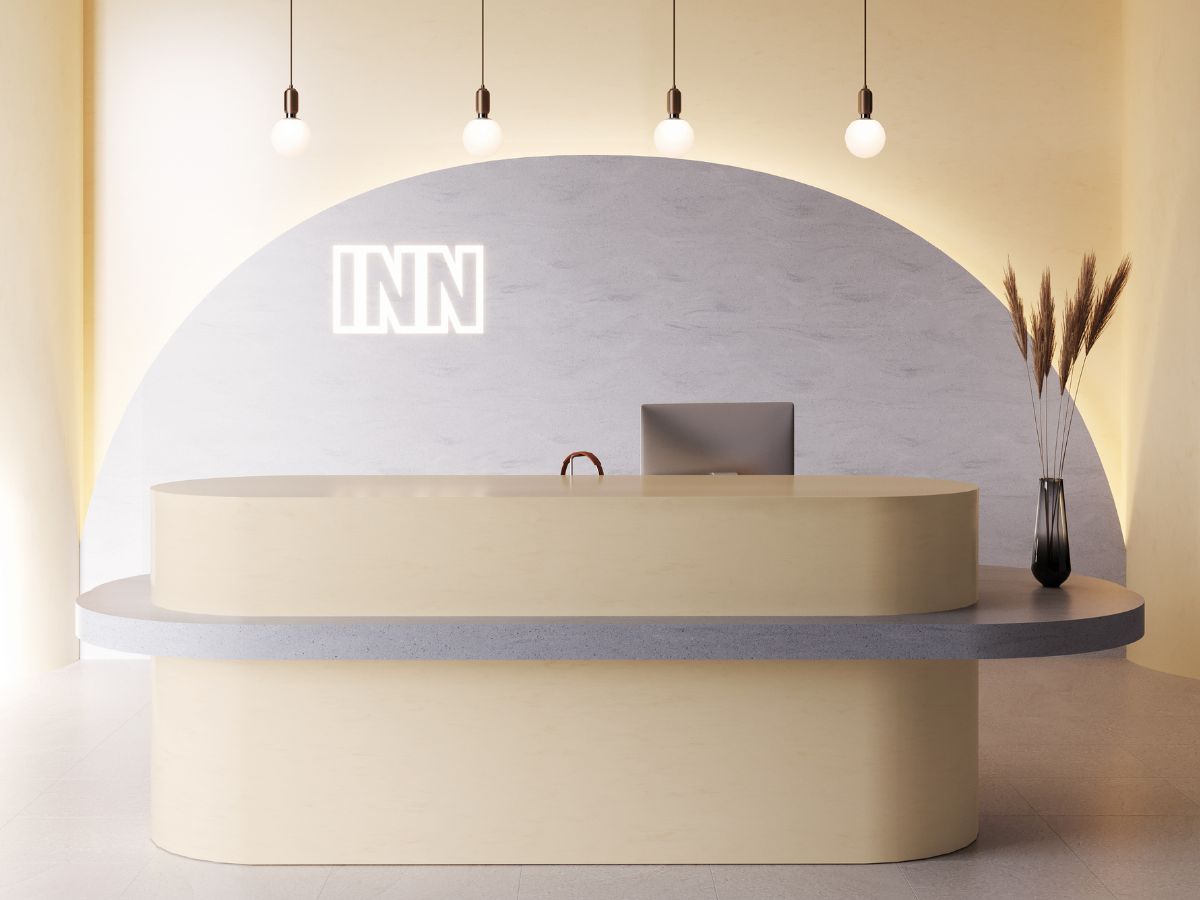
Selecting ecological materials is fundamental to reducing the carbon footprint of the construction. Krion® Line, for example, is perfect for cladding and furniture thanks to its composition and low environmental impact.
Fitwall® offers decorative panels that are not only easy to install, but are also a sustainable alternative, with a minimum of 6% recycled material, for high-traffic spaces such as receptions and common areas.
Krion Shell® shower trays, washbasins and bathroom countertops are available in both matt and gloss finishes. This material allows for the creation of high-definition textures, Silk, Concrete and Rock, which contribute to the highest slip resistance coefficient, reaching Class III in shower trays. In addition, they contain a minimum of 5% recycled plastic waste in their total composition, thus committing to a more sustainable and environmentally friendly production.
2. Implementation of smart technology
Automation solutions optimise energy and water consumption. Centralised energy management systems can monitor and adjust resource use in real time, improving the building's efficiency.
3. Renewable energy and efficient air conditioning
Installing solar panels and harnessing geothermal or aerothermal energy can significantly reduce energy consumption.
In addition, opting for efficient air conditioning systems and high-performance windows improves thermal insulation and reduces emissions.
What is a sustainable hotel and how to get certified
It is an establishment that reduces its environmental impact and promotes responsible practices in all its operations. But to be officially recognised as such, it is necessary to obtain certifications that guarantee this commitment.
Key certifications for sustainable hotels
- LEED (Leadership in Energy and Environmental Design): International certification that assesses the sustainability of a building in areas such as energy efficiency, water management and materials used.
- BREEAM (Building Research Establishment Environmental Assessment Method): Measures the environmental impact of the building and its efficiency in the use of resources.
- GREEN KEY: International programme for sustainable tourist accommodation, focusing on water, energy and waste management.
- SCS Global Services: Recognises sustainable products and materials, such as those developed by Krion, that meet strict environmental and health criteria.
In addition, it is essential to use certified materials such as Recycled Content Krion® K·Life 1100, which stands out for its characteristic whiteness and for having a minimum content of recycled material in its composition of 5%. Find out more about this sustainable solution here.
How to implement sustainability in a hotel
Implementing sustainability in a hotel involves a comprehensive vision that encompasses everything from the architecture to the guest experience. Here are some tips;
Responsible design and construction
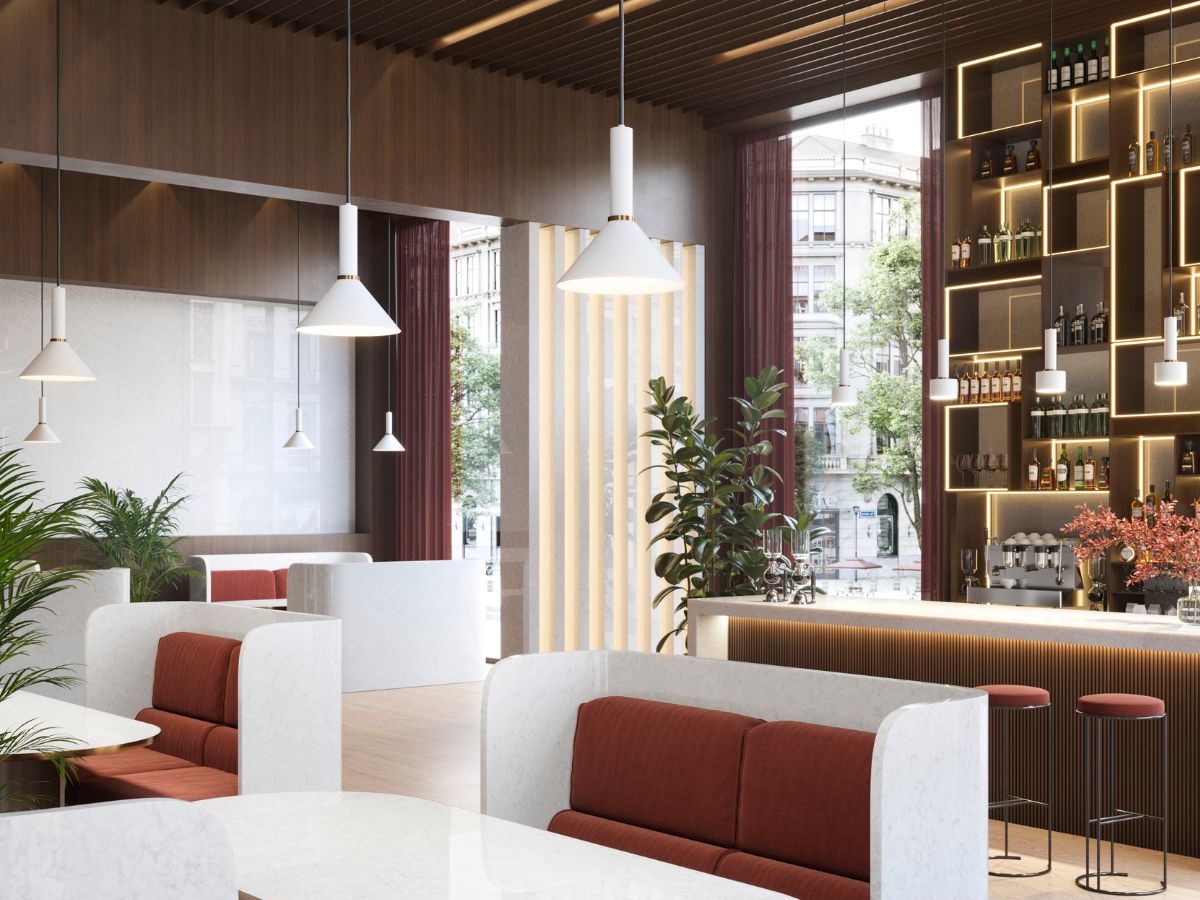
Opt for durable, low environmental impact materials such as Krion® LUX, a high mineral composition material that is inert in the environment.
The use of Alluslate® for large format cladding can reduce construction waste and improve project efficiency.
Optimising resource consumption
Incorporate energy recovery systems and intelligent water management. Installing taps and showers with low-consumption technologies can reduce water consumption considerably.
Creating sustainable experiences for guests
Inform your customers about the hotel's sustainable practices and encourage their participation in them.
Provide environmentally friendly transport options, charging stations for electric vehicles and accessible recycling programmes.
Monitoring and continuous improvement
Implement monitoring systems to evaluate the hotel's environmental performance and adjust strategies according to the results. Sustainability is a dynamic process that requires constant review and improvement.
Making a hotel sustainable is not only a responsibility to the planet, but also an opportunity to offer guests a unique experience. Adopting a sustainable approach improves brand image, reduces operating costs and responds to the demands of travellers who are increasingly aware of the impact of their choices.
Are you ready to transform your project into an example of sustainability? Every choice counts. Shall we talk?
, ,