Solid Surface vs Quartz: Which is the best material for your project?
25/06/2025
In contract, retail, or healthcare projects, choosing the right material for surfaces is not just a matter of aesthetics: it's about performance, sustainability, adaptability to design, and ease of long-term maintenance. Both solid surface and quartz are two well-established options in architecture and interior design, but which one best meets the demands of a professional project? This article compares both materials to offer you the solution that best suits your needs.
What will you discover in this article?
- You will learn about the fundamental differences in the composition, properties, and behavior of solid surface and quartz.
- You will identify which type of material is best suited to the location (bathrooms, kitchens, furniture, public areas) and the intended use of the space.
What is solid surface and what is quartz?
When it comes to defining surfaces in a professional project, understanding exactly what each material is is essential to assessing its suitability. Although both materials have uses that may be common—such as countertops—their composition, manufacturing process, and behavior are radically different.
Composition and manufacturing of solid surface
Solid surface, such as Krion® Lux, is obtained by combining alumina trihydrate—a mineral derived from bauxite—with acrylic resins, creating a homogeneous mass. This composition guarantees stable, compact sheets with almost zero porosity, with uniform distribution of color, texture, and technical properties throughout their thickness.

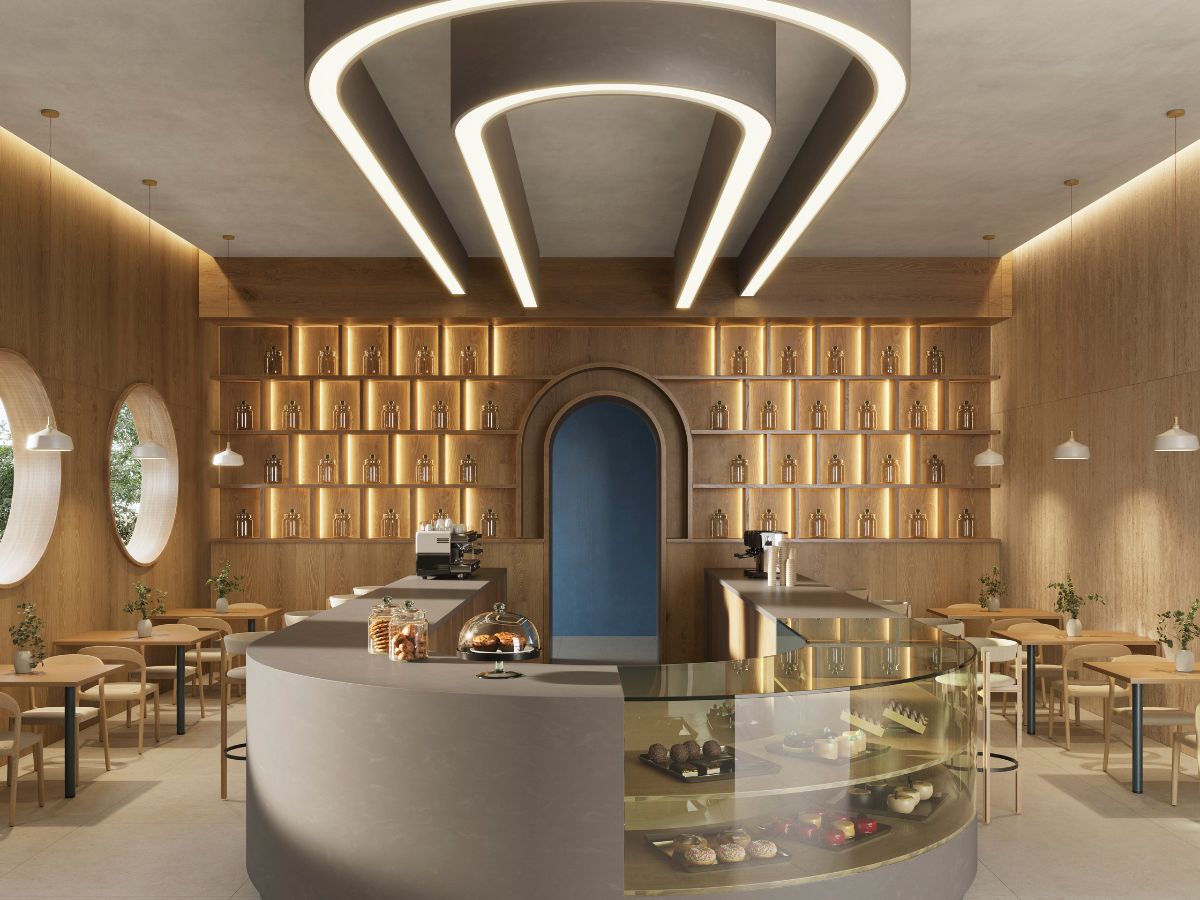
Krion® Lux Lime Cement
Thanks to this manufacturing process, each sheet can be worked as a continuous unit: it can be cut, sanded, joined, and thermoformed without any changes in tone or density. Its composition makes the material fire-resistant (classification B-s1, d0), VOC-free, and fully suitable for spaces with sanitary requirements, such as hospitals, laboratories, or catering environments.
Composition and manufacture of quartz
Quartz is a material composed of mineral particles, mainly natural quartz, mixed with polyester resins and pigments. During manufacture, the mixture is compacted under pressure and vacuum, forming a rigid sheet with a high surface density. Although it is a solid and resistant material, its structure is not homogeneous. The mineral particles remain visible and vary slightly in each sheet, which limits its handling and finishing.
Advantages of solid surface
In any professional project, evaluating the strengths of a material is essential to ensure its long-term performance. Below, we break down the advantages of solid surface compared to other materials:
- Visual and functional continuity: it allows for joints without visible seams, creating monolithic surfaces that are ideal for wet or high-traffic areas.
- Hygiene: its bacteriostatic properties prevent the proliferation of microorganisms.
- Repairability: it has excellent resistance to small cracks, and surface damage or scratches can be easily restored by sanding, extending its useful life without replacing parts.
- Thermoforming: it can be molded into curves, making it an excellent solution for wraparound designs or adaptations in custom designs and projects.
- Aesthetic stability: it is highly resistant to exposure to moisture or UV light.
- Aesthetic variety: it offers a wide range of colors and finish options, including options for backlighting.
- Zero moisture absorption: its compact and homogeneous structure prevents the penetration of liquids, making it easy to clean and maintain, even in high-traffic areas such as bathrooms, kitchens, and public areas.
Recommended applications
The choice of the most suitable material depends not only on its technical properties, but also on the type of use, the location within the space, and the specific needs of the sector. Below, we break down the application recommendations:
Solid surface in countertops, bathrooms, and custom furniture
Solid surface stands out in spaces where a continuous, precise, and highly customized finish is desired, such as environments such as public bathrooms, dressing areas, or shared kitchen areas. It is also ideal for projects that require custom-made furniture or unique architectural elements: custom bars, counters with special geometries, or corporate furniture, where visual consistency is part of the identity of the space.
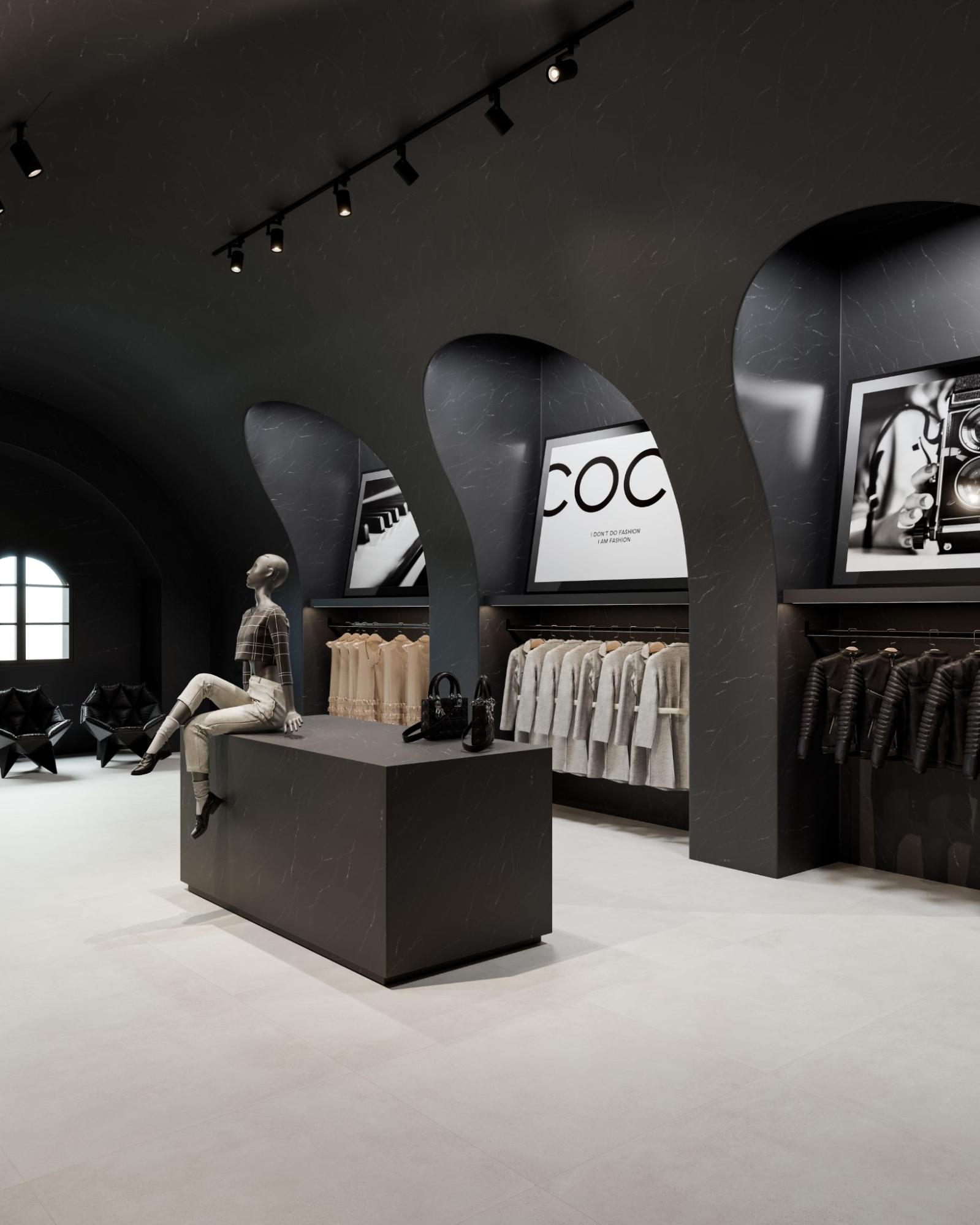
Krion®Lux Stone Dark
Comparison by sector: hospitality, retail, and contract
- Hospitality: intensive cycles of use and cleaning require materials that maintain their appearance without degrading over time. Solid surface allows for quick and discreet interventions, which is key in environments where it is not feasible to stop activity. Quartz, as it cannot be repaired, requires greater planning for replacement.
- Retail and corporate spaces: visual identity and customization make all the difference. In this context, solid surface adapts to the brand's design and allows the brand's personality to shine through in the project.
- Contract (healthcare, education, transportation): here, the material's ability to withstand high traffic and facilitate intensive cleaning is important. Solid surface offers long-term solutions thanks to its properties.
Design and customization aspects
In projects where aesthetics are a strategic tool—whether to differentiate a brand, guide the user, or create a spatial experience—the material must respond with flexibility, visual consistency, and expressive possibilities.
Creative possibilities with solid surface
Solid surface allows for a level of formal and aesthetic customization far superior to traditional materials. Thanks to its homogeneous composition and ability to be thermoformed, it adapts to curved designs, soft edges, or enveloping volumes with visual continuity and without cuts. In addition, in terms of color, it offers a wide range of colors, including options for backlighting, allowing it to be adapted to the visual identity of the project.
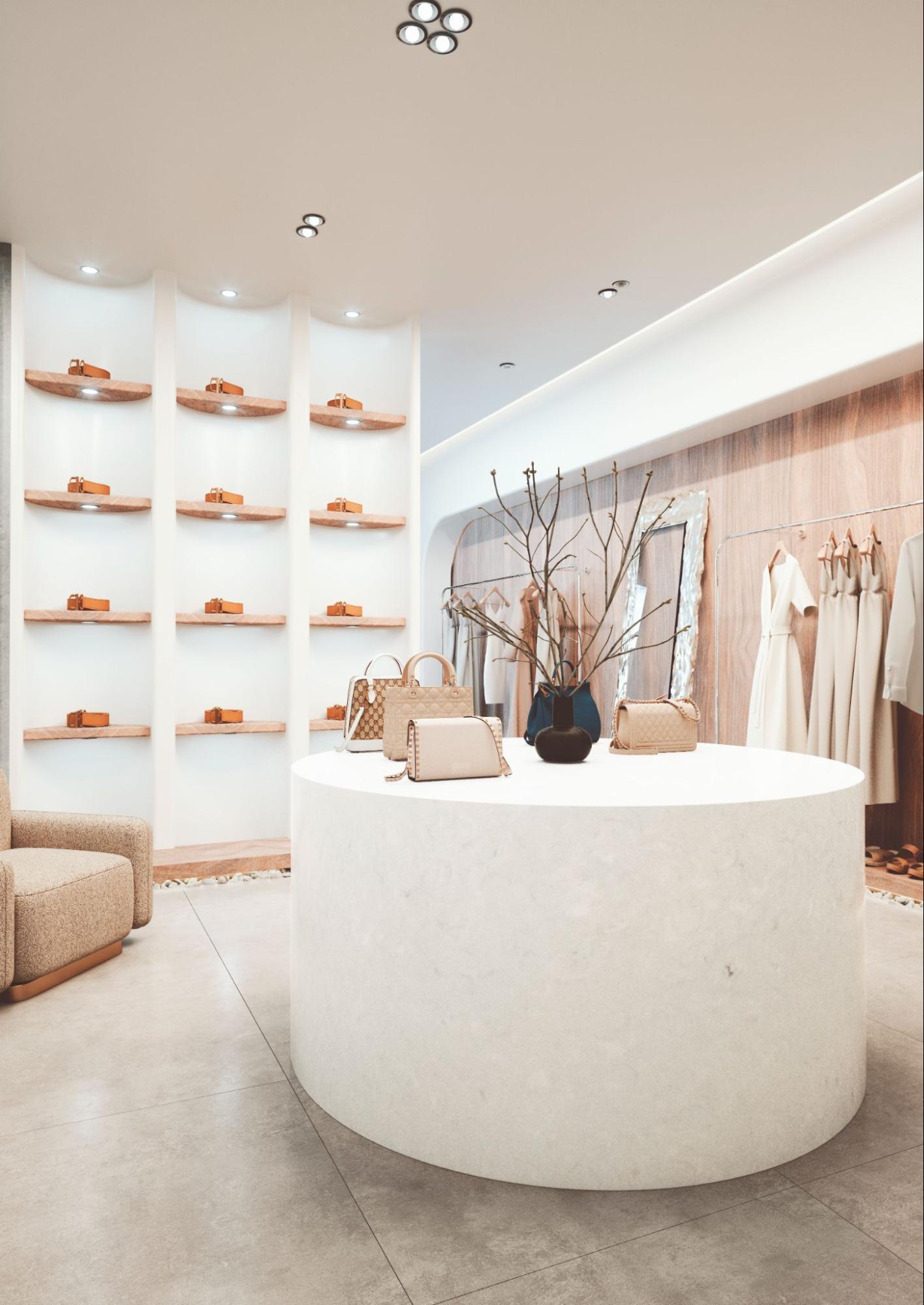
Krion®Lux Nebula Grey
Maintenance and durability in real use
In professional environments, the durability of a material depends not only on its resistance, but also on its ability to maintain its appearance and functionality with minimal operating costs. Solid Surface stands out for its low maintenance and high long-term performance. Thanks to its non-porous surface with no visible joints, residue accumulation is reduced, making cleaning easier in commercial, healthcare, or high-traffic environments. In addition, in the event of surface damage or scratches, localized repairs can be made without replacing the entire piece, minimizing downtime and operating costs.
You may be interested in -> How to clean and repair Krion® Lux
In comparison, quartz also performs well against wear and tear, but its durability depends largely on care. If damaged, it usually requires complete replacement of the piece, which can lead to disruptions in the space and higher intervention costs.
Summary of the comparison between solid surface and quartz
|
Appearance |
Solid Surface |
Quartz |
|
Composition |
Aluminium trihydrate + acrylic resins |
Natural quartz + polyester resins and pigments |
|
Structure |
Homogeneous throughout its thickness |
Non-homogeneous, with visible particles |
|
Porosity |
Virtually zero |
Low, but less uniform |
|
Thermoforming |
Yes, can be curved and adapted to all types of shapes |
No, only flat cuts |
|
Repairability |
Local repairs possible |
In case of extreme damage, complete replacement is required |
|
Aesthetics and color |
Wide variety of colors, translucent and backlit options |
Range focused on stone imitations, predefined colors and patterns |
|
Visual continuity |
Imperceptible joints |
Visible joints, especially on large surfaces |
Which material should you choose according to your project and professional profile?
For architects, interior designers, and project planners, choosing the right material must go beyond aesthetic decisions. Solid Surface offers unique versatility that not only meets functional needs but also amplifies the creative possibilities of any project. Its ability to be molded, thermoformed, and worked as a continuous unit allows for the creation of customized surfaces that integrate seamlessly with the design of the space.
In environments that require highly adaptable solutions, such as retail, offices, and hospitality, Solid Surface becomes a flexible design tool that allows you to create unique experiences. Its ability to integrate lighting, curves, and complex geometries provides a freedom of design that other materials cannot match, making it an indispensable resource for projects that seek to stand out for their originality and functionality.
Frequently asked questions about solid surface and quartz (FAQs)
Can solid surface and quartz be combined in the same project?
Yes, as long as their technical properties are respected and the use of each is well defined. The key is to maintain aesthetic and functional consistency and to plan joints or transitions that do not compromise the design.
Which is best suited for spaces with sanitary requirements?
Solid surface. Due to its non-porous surface, imperceptible joints, and bacteriostatic properties, it is the ideal solution for environments that require constant hygiene, such as clinics, hospitals, or laboratories. Quartz, although hygienic in general terms, does not offer the same guarantee of continuity or integration capacity.
What are the differences in installation?
Solid surface allows for adjustments and joints to be made on site with visually seamless results. This is an advantage in projects with technical assembly. Quartz requires prior fabrication in a workshop, transport as a finished piece, and visible joints, which limits its adaptability during installation.