Materials for soundproofing spaces: how Krion® LUX contributes to sound insulation
02/07/2026
Noise affects privacy, rest, and the user experience in any space. In hotels, offices, restaurants, stores, healthcare facilities, or homes, having acoustically isolated areas helps create more comfortable, functional, and pleasant environments.
To achieve this, simply adding a decorative element is not enough. It is necessary to define a solution tailored to the project’s needs, choose materials that contribute to sound insulation, and pay close attention to every focal point within the space.
At Krion, we view acoustic comfort as an opportunity to enhance people’s experience without limiting design. Thus, our solid surface contributes to sound insulation thanks to its intrinsic properties and, at the same time, allows for the creation of seamless, durable, hygienic, and customized spaces.
What will you learn in this article?
- How soundproofing a space works.
- What methods help reduce noise transmission.
- What materials are involved in an acoustic solution.
- How to design a soundproofed space step by step.
- In what applications Krion® Lux can be used.
- Why our solid surface can achieve overall sound insulation of up to 33.5 dBA.
How soundproofing a space works
Sound is transmitted through vibrations. When sound waves reach the elements that define a room, some of the energy is reflected, some is absorbed, and some may be transmitted to adjacent spaces. Therefore, it is important to distinguish between three concepts that are often confused:
- Acoustic insulation: reduces noise transmission between spaces.
- Acoustic treatment: improves sound quality within a single room by reducing echo and reverberation.
- Soundproofing: a common term used to describe solutions aimed at limiting the propagation of sound to other areas.
When the goal is to reduce interior echo, absorbent materials are primarily used. However, when the objective is to create acoustically more isolated spaces, other factors come into play: mass, continuity, airtightness, absorption, and vibration control.
Therefore, acoustic performance does not depend on a single choice. It depends on how materials are combined, how joints are handled, and how the solution is adapted to the activity that will take place in the space.
Methods for Reducing Noise When Soundproofing a Space
To reduce sound transmission, it is necessary to treat the space as a complete system. Every construction decision influences the final acoustic performance. Although each project requires a specific solution, there are four basic principles to keep in mind:
- Increase mass: Compact, dense materials hinder the passage of airborne noise.
- Reduce vibrations: Decoupled elements help limit sound transmission through the structure.
- Incorporate absorption in interior chambers: Certain materials can reduce resonances and improve overall performance.
- Ensure continuity: joints, intersections, utility penetrations, and perimeters must be sealed to prevent sound leakage.
None of these principles works in isolation. The solution must address the source of the noise, the required level of privacy, the dimensions of the space, and the project’s design, usage, and maintenance requirements.
Best Materials for Acoustic Insulation of Spaces
The most appropriate solution depends on the type of noise, the use of the space, construction constraints, and the required level of insulation. Rather than seeking a single material capable of meeting all needs, it is better to select materials that each serve a specific function within a coherent solution.
Krion® LUX: Solid Surface for Projects with Acoustic Requirements
Krion® LUX is a new-generation solid surface that contributes to the acoustic insulation of spaces where privacy, well-being, and quality of use are key factors.
Its composition, consisting primarily of natural minerals such as aluminum trihydrate and high-strength resins, results in a compact, homogeneous material with virtually zero porosity. These characteristics, along with its density, the refined size of its particles, and the ability to work with different thicknesses, enhance its performance in terms of sound transmission.
Furthermore, Krion® LUX allows for the creation of continuous surfaces with imperceptible joints. This continuity helps reduce discontinuities within the project and enables the integration of acoustic performance, durability, hygiene, and design into a single solution.
According to tests conducted in accordance with ISO 717-1:2013, our solid surface can achieve an overall sound insulation rating of up to 33.5 dBA. Since decibels are measured on a logarithmic scale, an apparently moderate reduction can result in a noticeable improvement in the acoustic comfort of a space.
In addition to this capability, there are other significant advantages for hotels, offices, restaurants, retail stores, healthcare facilities, listening rooms, and recreational spaces: easy cleaning, resistance to heavy use, reparability, and the freedom to create curves, volumes, built-in furniture, and custom solutions.
Absorptive Materials to Complement an Acoustic Solution
Absorptive materials help control sound energy within chambers or rooms. This group includes rock wool, glass mineral wool, polyester fibers, PET panels, geotextiles, cork, and certain technical foams. Their primary function is to reduce reverberation or improve acoustic comfort within a space. On their own, they are not always sufficient to limit noise transmission between adjacent areas.
Therefore, they are used to complement compact materials, decoupled systems, and sealing solutions that contribute to overall acoustic performance.
Materials to Provide Mass and Decoupling
Acoustic panels, high-density sheets, and other mass-providing materials help hinder the transmission of airborne noise.
On the other hand, acoustic clips, silent blocks, resilient strips, and decoupled profiles reduce the transfer of vibrations through the structure. These elements may be necessary in projects with high acoustic requirements. Their selection should be based on the type of noise, the available space, and the technical configuration defined for each case.
Sealants and Continuity Elements
Acoustic putty, elastic sealants, and watertight strips help prevent air leaks and discontinuities along perimeters, joints, utility penetrations, and construction interfaces. These are discreet yet crucial elements. Even a small opening can compromise the performance of an entire acoustic solution.
How to Soundproof a Space Step by Step
To design a space with good acoustic performance, it is necessary to analyze both the source of the noise and the project’s functional and aesthetic requirements.
- Identify the source of the noise. Determine whether it is airborne noise, impact noise, vibrations, or internal reverberation.
- Analyze the use of the space. A hotel, a clinic, a restaurant, an office, or a rehearsal room all have different acoustic and maintenance needs.
- Define the required level of sound insulation. The solution must meet the anticipated requirements for privacy, comfort, and intended use.
- Select materials that provide good performance. Choose the combination of materials based on the type of noise, the characteristics of the space, the required level of sound insulation, and the project’s requirements for modification and maintenance.
- Incorporate complementary elements when necessary. Interior chambers, absorptive materials, mass sheets, or decoupled systems can enhance overall performance.
- Properly address joints and interfaces. Avoiding discontinuities is essential for limiting sound leakage.
- Integrate the design from the outset. Acoustic solutions must also align with the project’s identity, the required durability, and the experience intended for users.
- Validate the acoustic performance of the entire system. In projects with high requirements, it is advisable to seek specialized technical advice to evaluate the construction solution, the interfaces, and the required performance.
Applications of Krion® LUX in Projects with Acoustic Requirements
Krion® LUX enables the development of solutions for spaces and products where sound control, technical precision, and design must work in harmony.
High-fidelity speakers
One example of this application is Kroma, an Andalusian manufacturer of high-end speaker cabinets. The brand chose our solid surface to manufacture its speaker cabinets because of the material’s ability to contribute to sound insulation and enhance high-fidelity sound reproduction.
Constructed entirely from Krion® LUX, Kroma speakers combine technical precision, premium aesthetics, and design possibilities that are difficult to achieve with traditional materials. The material’s stability, its ability to be shaped, and the possibility of creating seamless pieces allow for the development of ergonomic and refined forms, designed to produce a clean, natural, and realistic sound.
Nightclubs, clubs, and nightlife venues
In venues with high sound pressure levels—such as nightclubs, concert halls, clubs, or nightlife venues—sound insulation is key to enhancing the indoor experience and limiting noise transmission to nearby areas.
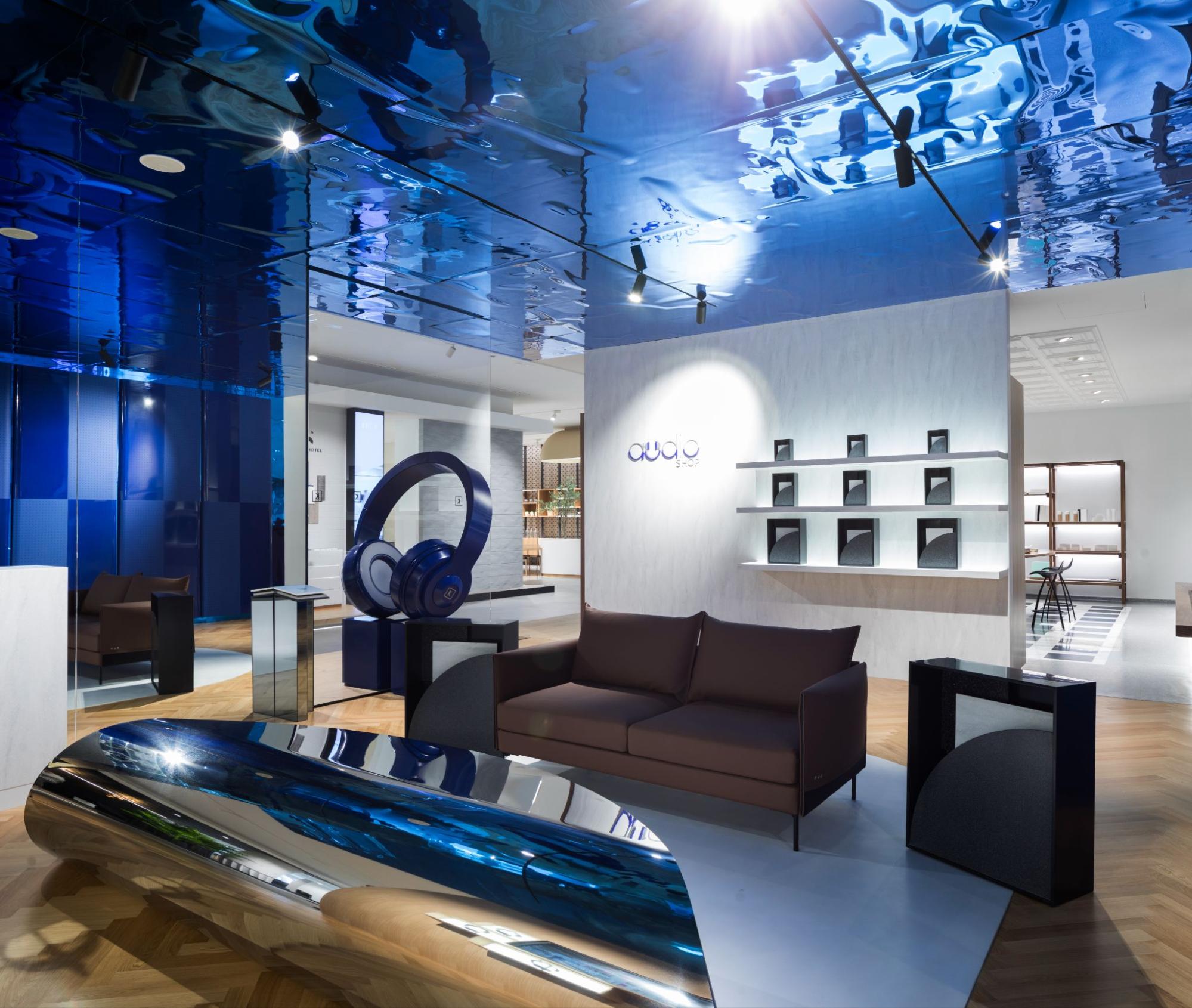
KRION® Lux can be incorporated into DJ booths, private rooms, VIP areas, entrances, hallways, lounge areas, or custom architectural elements. Its ability to create continuous volumes, curves, and custom surfaces allows for the design of immersive environments without compromising the venue’s acoustic requirements or visual identity.
Recording studios, rehearsal rooms, and listening rooms
In recording studios, rehearsal rooms, audiovisual production spaces, or listening rooms, sound quality is an essential part of the experience.
KRION® Lux can be integrated into booths, technical furniture, control areas, custom elements, or reception areas, providing continuity, durability, and design flexibility. In these types of projects, it should be combined with the acoustic treatment and insulation solutions specified by a specialist.
Frequently Asked Questions About Materials for Soundproofing Spaces
What is the best material for soundproofing a space?
There is no single material that works for all projects. The choice depends on the type of noise, the use of the space, the level of privacy required, and the room’s structural characteristics.
What is needed to reduce noise between adjacent spaces?
It is necessary to identify how sound is transmitted: through the air, via vibrations, through structural joints, or through doors, utilities, and other points of leakage. An effective solution must control the continuity of the space, minimize discontinuities, and select materials appropriate for the required level of sound insulation.
Does KRION® Lux contribute to sound insulation?
Yes. KRION® Lux has intrinsic physical characteristics that positively contribute to sound insulation, such as its compact composition, high mineral content, near-zero porosity, the ability to be fabricated in various thicknesses, and the continuity provided by its joints.
According to tests conducted in accordance with ISO 717-1:2013, KRION® can achieve an overall sound insulation rating of up to 33.5 dBA.
What is the difference between sound insulation and acoustic treatment?
Sound insulation aims to reduce noise transmission between spaces. Acoustic treatment, on the other hand, improves sound quality within a single room by reducing echo and reverberation.