Healthy buildings: How architecture can improve wellbeing
23/09/2024 [Updated on 21/10/2025]
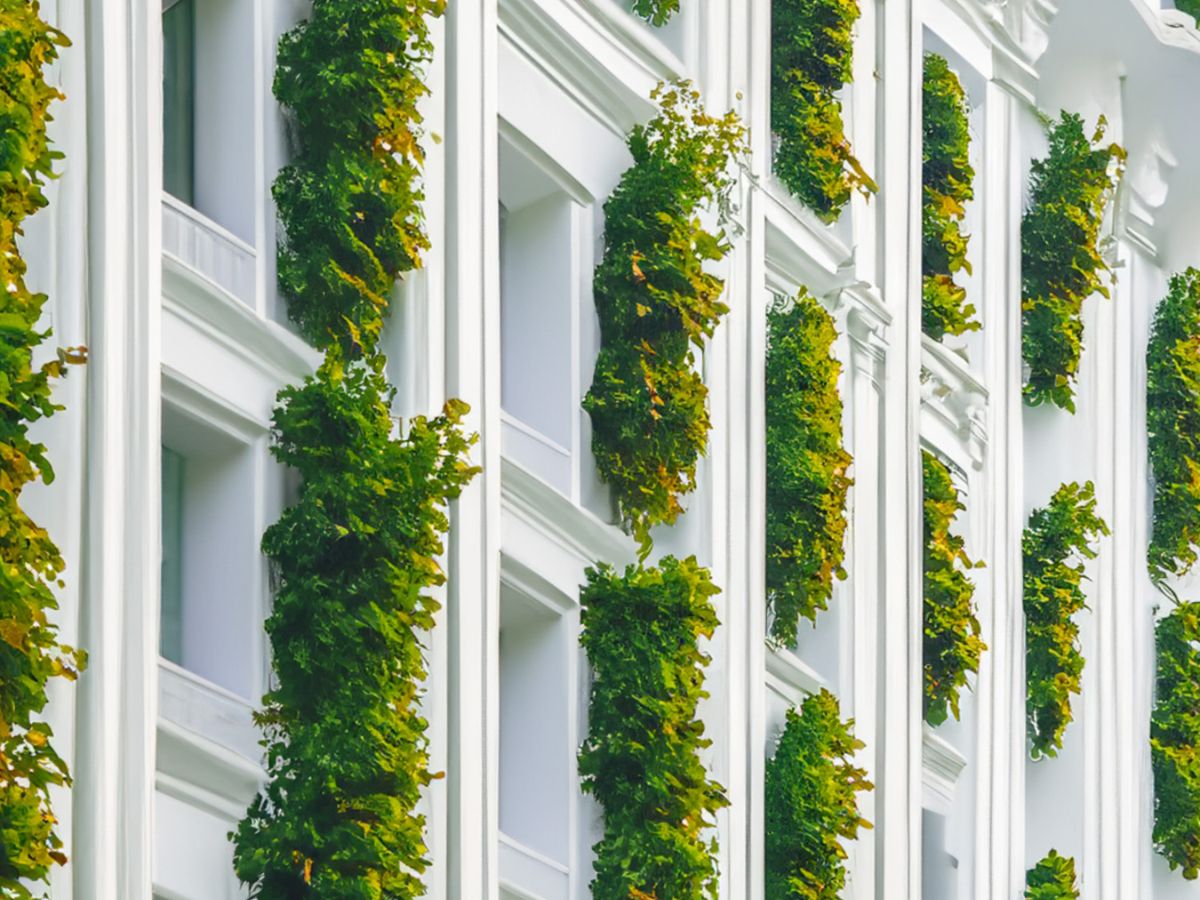
In a world increasingly aware of the impact of spaces on our health, wellness architecture is gaining ground.
Today, healthy buildings focus on ensuring environments that promote the quality of life of their occupants, as well as the quality of life of the planet.
At Krion, we are deeply committed to this vision. Our dedication to innovation and sustainability is evident in our state-of-the-art solid surfaces, designed to give architects, interior designers and designers the ability to create projects that are greener and kinder to their users.
What are healthy buildings?
These are buildings designed to promote people's physical and mental health. It is an architecture that goes beyond the aesthetic or functional, integrating concepts such as sustainability, connection with nature and comfort.
These buildings take into account principles such as air quality, ventilation, luminosity and the use of materials that minimise the impact on the environment, among others:
Accessibility
Healthy architecture is committed to inclusion. A building must be accessible to all people, regardless of their physical abilities, which means designing spaces without architectural barriers.
Ventilation
Adequate ventilation is essential to maintain good air quality, creating a healthy indoor environment for the people who live in it.
Brightness
Natural light is essential for well-being. Therefore, these buildings are designed to maximise sunlight, which helps to improve mood and the sleep cycle.
Temperature, humidity and thermal comfort
Controlling the temperature and humidity in interior spaces helps to prevent respiratory and skin problems. This type of building incorporates air conditioning systems that regulate these factors in an efficient and sustainable manner.
Security
A healthy building must be safe in all aspects, from the structure to the materials used. This includes fire prevention, clear evacuation systems and adequate lighting in hazardous areas.
It should be noted that Krion® Lux meets fire quality standards (BS1DO), as it does not contribute to the spread of flame and is self-extinguishing.
Noise
Noise pollution is one of the greatest enemies of well-being in urban spaces. Therefore, minimising external noise by means of suitable insulation systems is one of the bases of these architectural projects.
Why is healthy architecture important?
Healthy architecture is key to preventing "sick building syndrome", a problem affecting millions of people around the world, which arises when poor space conditions affect the health of its inhabitants.
The implementation of the principles outlined above improves the well-being of occupants, as well as extending the lifespan of buildings in the interests of sustainability.
In this regard, it is essential to consider the life cycle of buildings, from design to demolition, in order to minimise environmental impact and ensure a healthy environment throughout their use. During this process, it is crucial to opt for materials that emit low levels of volatile organic compounds (VOCs) and do not release toxic substances.
Advantages of healthy buildings
-
Improved health: People living or working in these buildings experience fewer respiratory problems and less stress.
-
Increases productivity: Air quality, natural light and a comfortable environment have a positive influence on concentration and performance.
-
Energy savings: Buildings designed with sustainability principles in mind tend to be more energy efficient, which translates into lower costs.
-
Higher market value: These welfare-compliant buildings tend to be more attractive to both investors and users.
Certifications required for healthy buildings
For a building to be considered healthy, there are several certifications that guarantee its compliance with wellness and sustainability standards:
RECYCLED CONTENT
It ensures that materials contain a significant percentage of recycled components, making them a more sustainable option for construction projects, supporting the circular economy.
Many of the products we have developed have this certification as you can see in this video.
LEED (Leadership in Energy and Environmental Design)
It evaluates aspects such as the efficient use of water, energy and materials. A LEED-certified building ensures that it meets high sustainability standards.
WELL
Focused specifically on occupant well-being, assessing factors such as air quality, natural light and physical activity.
FRIENDLY MATERIALS
It is a guide to healthy materials, which, thanks to an analytical method, is able to evaluate and compare how building materials affect interior spaces and, consequently, the health of their occupants. KRION, thanks to its excellent properties and high quality compounds, is a safe bet for generating healthy environments.
BREEAM
Measures the environmental impact of buildings throughout their life cycle. It assesses the design, construction and use of the building, promoting efficiency and sustainability.
GREENGUARD
It ensures that the products used emit low levels of volatile organic compounds (VOCs), which helps to improve indoor air quality. GREENGUARD Gold certified materials are safe for use in sensitive environments such as schools and hospitals.
FSC (Forest Stewardship Council)
It ensures that forest-based materials, such as wood in our packaging, are responsibly sourced, with a commitment to environmental sustainability.
Declare
Part of the Living Building Challenge programme, this certification promotes transparency in the composition of materials, ensuring that they are free of toxic chemicals.
How Krion® contributes to the architecture of wellbeing
Our materials can play a crucial role in creating healthy buildings with a lower environmental impact. A clear example is Krion® Lux, a material whose properties contribute to the well-being of occupants, efficiency and longevity of projects.
Its characteristics such as strength, durability, robustness, repairability, mouldability and adaptability make it a sustainable material fully aligned with the principles of this architectural branch.
The versatility of Krion® Lux allows its application in a wide variety of spaces, from sustainable facades and furniture to kitchens and bathrooms. Wherever it is used, it offers a natural and attractive aesthetic, without compromising the highest standards of hygiene and durability. Thanks to its bacteriostatic properties and easy maintenance, Krion® Lux is ideal for creating healthy environments, while ensuring strength and longevity in every architectural project.