Mediterranean style, bringing its light and tranquillity to contemporary interiors
28/07/2026
There are spaces that seem to capture the light and make time pass more slowly. Interiors where natural tones, textures and simple shapes create an immediate sense of calm. That is the essence of the mediterranean style.
Inspired by the landscape, architecture and way of life of the regions surrounding the mediterranean, this style transforms rooms into bright, welcoming spaces that feel connected to their surroundings. Stone, wood and earth-toned ceramics create environments designed to be enjoyed in a natural way.
In a modern mediterranean-style home, this heritage is reinterpreted through clean lines, seamless surfaces and integrated solutions that combine beauty, functionality and durability.
What will you learn in this article?
- What is the mediterranean style?
- The key features of the mediterranean style
- Differences between traditional and modern mediterranean styles
- Which colours work well in a mediterranean home?
- Ideas for applying mediterranean-style décor to every space
- Contemporary surfaces for a mediterranean interior
- Design a mediterranean space with Krion
What is the mediterranean style?
The Mediterranean style is an architectural and interior design movement inspired by the traditional homes of the regions bordering the Mediterranean Sea. It draws inspiration from the whitewashed houses of the Greek islands, Ibizan fincas, the farmhouses of the Spanish coast, Italian buildings and homes in North Africa. Although each region brings its own nuances, they all share an essential idea: adapting the space to the light, the climate and a way of life in which the interior and exterior maintain a constant relationship.
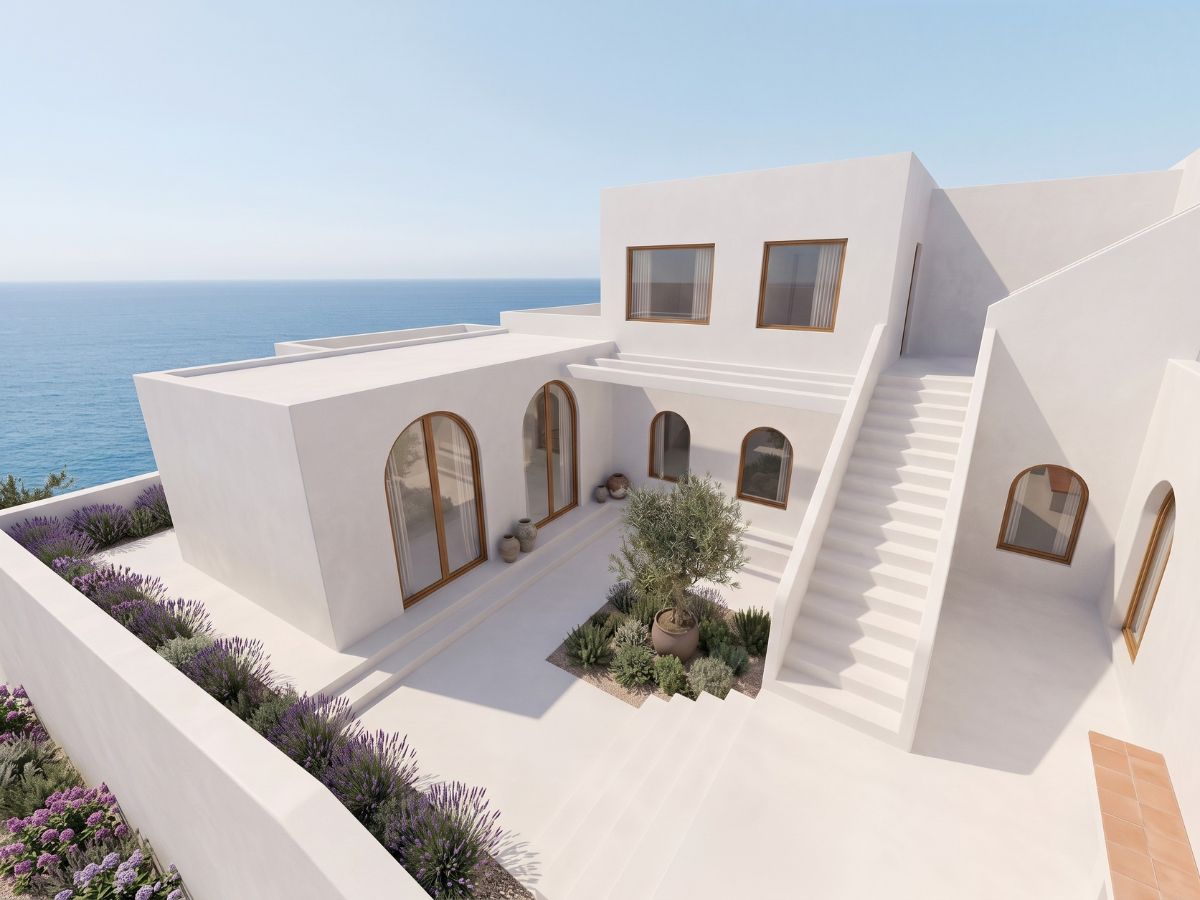
For this reason, mediterranean-style décor tends to combine light-coloured walls, earth tones, stone, wood, plant fibres, handcrafted ceramics and lightweight fabrics. The spaces feel fresh and bright, yet also warm, imperfect and liveable.
The aim is not to literally recreate a coastal home. It is about capturing its essence: calm, simplicity, light and a connection with the materials and colours of the landscape.
The keys to the mediterranean style
To incorporate the mediterranean style into a contemporary project, there is no need to resort to themed décor. The key lies in combining light, colour, texture and functionality in a balanced way, tailoring each decision to the actual characteristics of the space.
Natural light and a sense of spaciousness
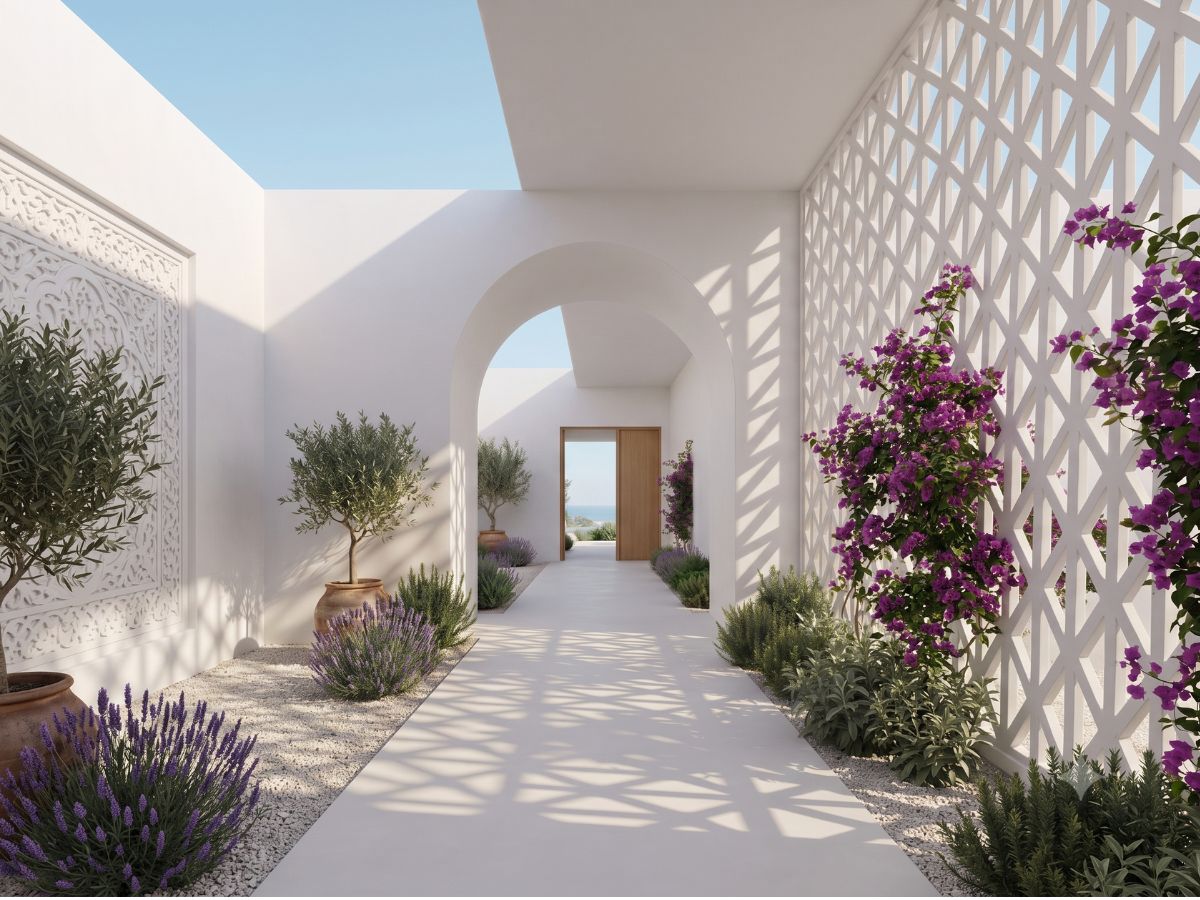
Light is the starting point for any mediterranean interior. Large windows, patios, glass doors and open-plan layouts help natural light flow through the different rooms.
Light colours on walls, ceilings and large surfaces reflect this light and visually expand the space. Pure white can be used, although off-whites, ivories, sandy shades and beiges create a warmer, more enveloping effect.
In small spaces, it is best to avoid overly sharp contrasts and use a continuous colour palette. It is also advisable to integrate the furniture, keep walkways clear and choose pieces that are visually light.
Colours inspired by the landscape
The mediterranean colour palette is born from the surroundings. White is reminiscent of whitewashed façades; sand and beige tones, of beaches and limestone; ochres and terracottas, of earth and ceramics; and blues and greens, of the sea and vegetation. To create a balanced atmosphere, it is helpful to start with a neutral base and add colour to specific elements:
- Warm whites, cream and ivory for walls and main surfaces.
- Beige, sand, stone and greige to add depth.
- Terracotta, clay and rust as warm accents.
- Navy blue, greyish blue or turquoise in selected details.
- Olive green, sage or cypress to reinforce the connection with nature.
Materials with texture and character
The authenticity of the mediterranean style depends, to a large extent, on the choice of materials. Excessively smooth or uniform surfaces can appear cold if not combined with textures, reliefs and finishes that add depth. Stone, wood, lime, terracotta, ceramics, linen, cotton and woven fibres form part of its typical vocabulary.
However, a contemporary project can also reinterpret these references using decorative surfaces and panels that replicate mineral, stone, textile or handcrafted appearances. The important thing is not to pile on materials, but to choose them with intention. A textured wall, a continuous worktop, a wooden table and a fibre lamp may be enough to create a mediterranean atmosphere without overloading the space.
Curved shapes and organic architecture
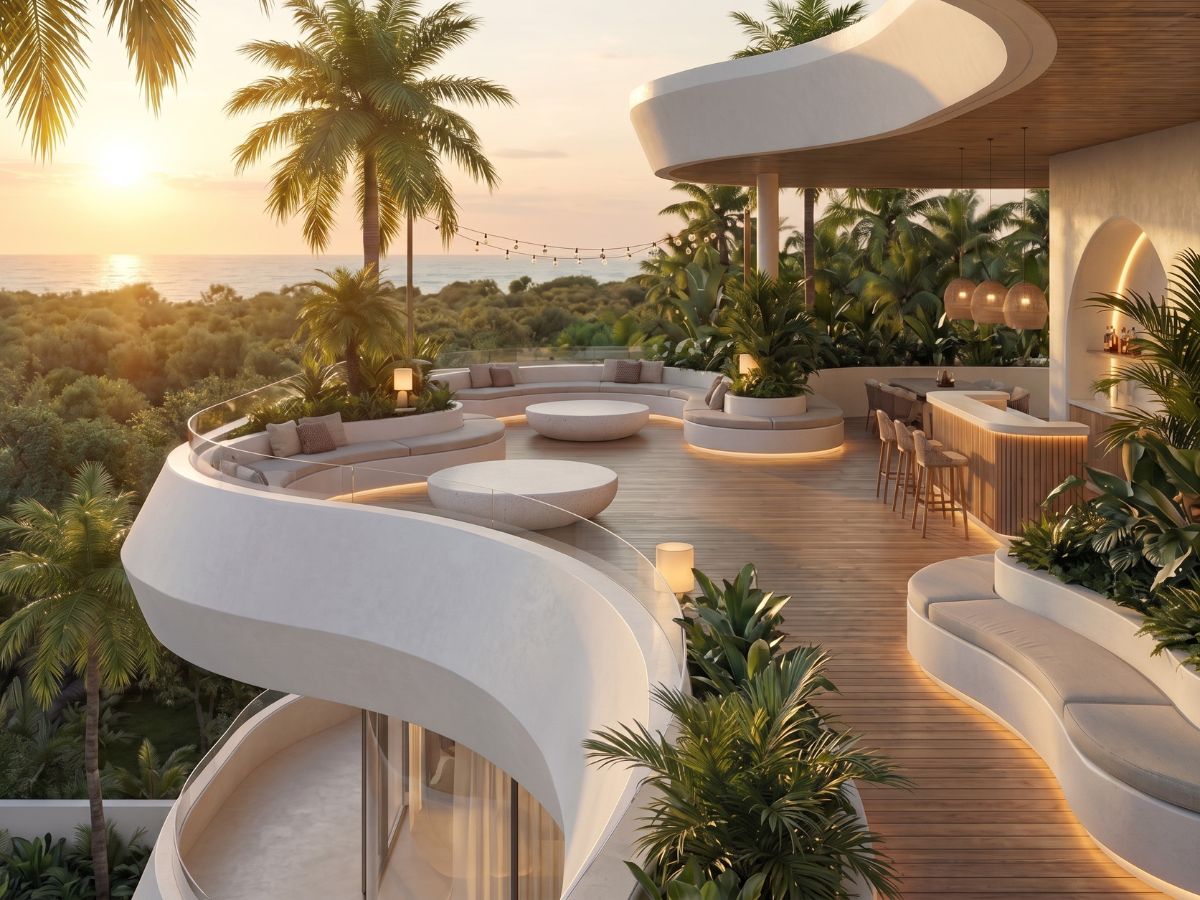
Arches, rounded corners, built-in benches, alcoves and soft volumes are recurring elements in mediterranean architecture. These shapes are reminiscent of structures that have been slowly moulded and help to make spaces feel more welcoming.
In a modern mediterranean-style home, curves can feature in a kitchen island, a countertop, a built-in washbasin, a headboard, a bookshelf or a transition between rooms.
The result is particularly striking when the curved form is not merely used as a decorative feature, but actually improves circulation, integrates different functions or provides a bespoke solution.
Continuity between interior and exterior
The Mediterranean invites you to live with your doors open. Terraces, porches, patios, balconies and gardens function as an extension of the home and play an active part in its layout.
To reinforce this continuity, it is advisable to maintain a coherent relationship between the colours, textures and proportions of the interior and exterior. Repeating a stone tone, a type of wood or a geometric pattern helps to visually connect both spaces.
It also helps to use large openings, light curtains, Mediterranean vegetation and furniture that does not create too rigid a boundary. The transition should feel natural, as if the light and the landscape could flow throughout the entire project.
Differences between traditional and modern Mediterranean styles
The traditional mediterranean style is characterised by thick walls, lime finishes, wooden beams, clay floors, handcrafted ceramics, pronounced arches and sturdy furniture. The interiors convey an imperfect beauty and a very direct connection to local building techniques.
The modern mediterranean style retains this connection with nature, but simplifies its forms. The layouts are more open-plan, the furniture is integrated into the architecture, and the colour palette becomes more restrained.
We also see continuous surfaces, monolithic volumes and technical solutions that facilitate maintenance. Joints are visually minimised, decorative elements are selected with greater precision, and curves are reinterpreted through clean geometries.
The main difference, therefore, lies not in abandoning tradition, but in refining it. A contemporary mediterranean home can combine a textured wall, a handcrafted table and linen fabrics with a kitchen featuring clean lines, integrated lighting and bespoke furniture.
Which colours work well in a mediterranean home
The colour scheme should be tailored to the amount of natural light, the size of the space and the atmosphere you wish to create. Not all mediterranean homes require the same intensity of colour. A base of off-white, sand or light stone works well in most projects. Building on this, different combinations can be created:
- White, sand and light wood: a bright, warm option that is easy to maintain over time.
- Ivory, terracotta and olive green: suitable for interiors with a more artisanal feel.
- Beige, stone and greyish blue: a serene interpretation of the coastal landscape.
- Warm white, mineral grey and black: a more architectural take on the modern mediterranean style.
- Cream, clay and muted burgundy: an inviting scheme for hotels and restaurants.
- Sand, dark wood and deep green: an elegant combination for contract spaces.
Ideas for applying mediterranean-style décor to every space
Mediterranean décor can be adapted to any room if you start with its essential principles. Light, natural tones, textures and simplicity should be interpreted according to the space’s use, without applying the same solution throughout the entire home or project.
Living and dining room
A mediterranean-style living room should be light, comfortable and easy to live in. Sofas with soft, rounded shapes, linen or cotton textiles, and tables made of wood or with a stone-like appearance create a balanced foundation. Rather than incorporating lots of small pieces, it’s best to choose a few statement pieces: a fibre lamp, a large-scale artwork, a textured wall or a built-in bench.
In the dining room, organically shaped tables and chairs made of wood, rope or plant fibres reinforce the sense of naturalness.
A neutral colour palette allows you to introduce ceramics, plants or textiles in more intense colours without losing a sense of serenity.
Kitchen
Mediterranean-style kitchens combine functionality, light and materials that are pleasant to the touch. Open-plan layouts encourage shared living, whilst islands and peninsulas become spaces for cooking, chatting and gathering.
To achieve a contemporary look, a continuous worktop in white, sand or a stone-coloured shade can be used. This neutral base blends perfectly with light wood furniture, matt fronts and small ceramic accents.
Rounded shapes help to soften the look of islands and breakfast bars, particularly in kitchens that open onto the living room. Built-in sinks, visually discreet joints and easy-to-clean surfaces help to maintain a tidy appearance during everyday use.
Bathroom
Mediterranean-style bathrooms aim to convey a sense of freshness and well-being. Light colours, mineral textures, alcoves, built-in washbasins and curved shapes all contribute to creating a relaxing atmosphere. A warm white or sand-coloured base can be combined with wood, plant fibres and taps in soft metallic tones. In small bathrooms, wall-hung units and a seamless transition between the worktop and washbasin help to reduce visual clutter.
In hotel or restaurant projects, it is also important to consider durability, ease of cleaning and the possibility of replicating a design solution in different rooms without losing its identity.
Bedroom
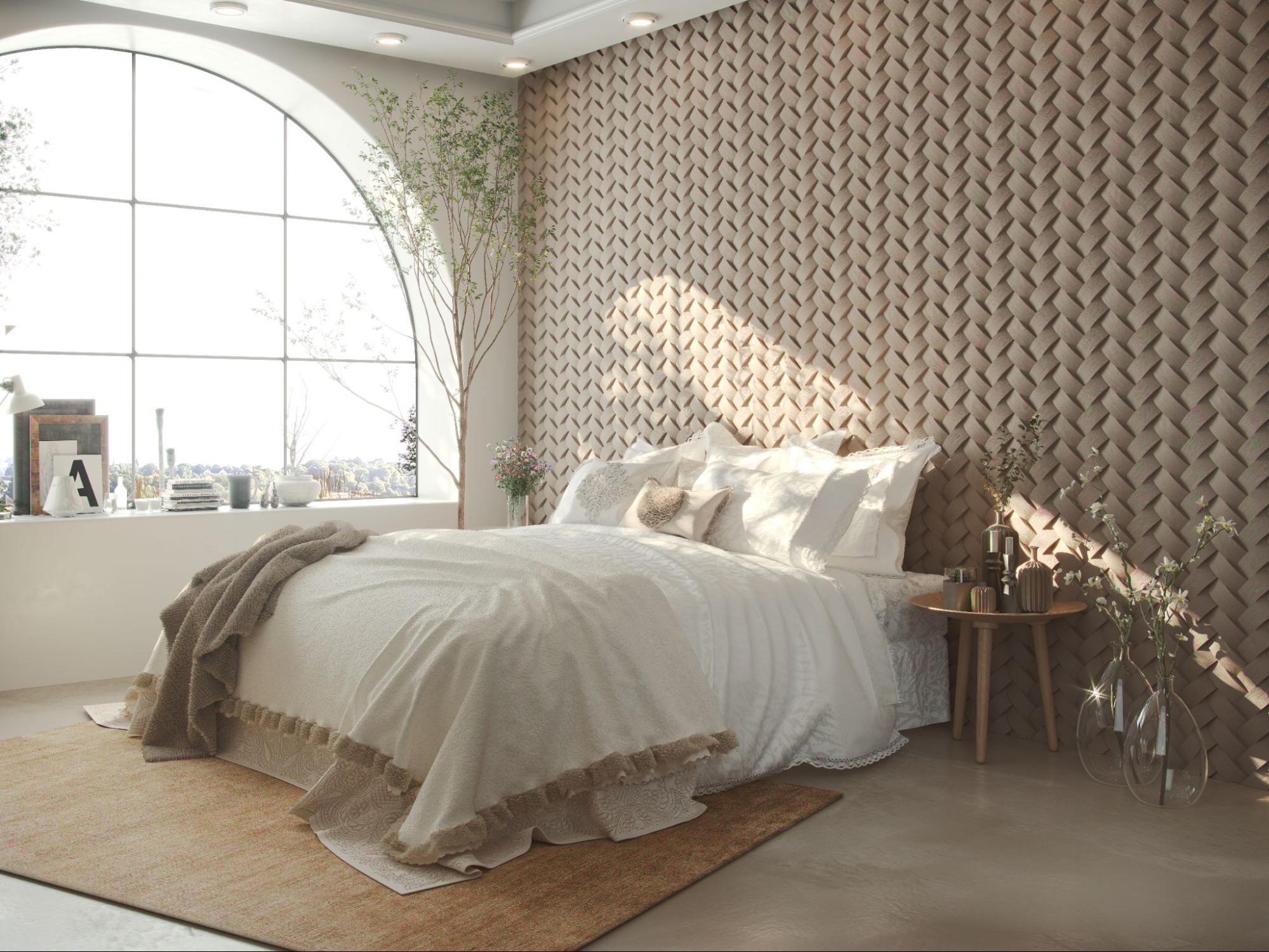
A mediterranean-style bedroom should feel calm, light and sheltered. Off-whites, sandy shades and earthy tones create a warm, enveloping atmosphere, whilst natural textiles add movement and comfort.
Headboards, illuminated alcoves and built-in bedside tables help to simplify the furniture layout. A textured wall can also be incorporated to add depth without resorting to too many decorative objects.
Façades
Mediterranean façades are characterised by their light colours, their relationship with light and the presence of simple forms. White or stone walls, deep openings, latticework and curved forms help to protect against and soften the sunlight.
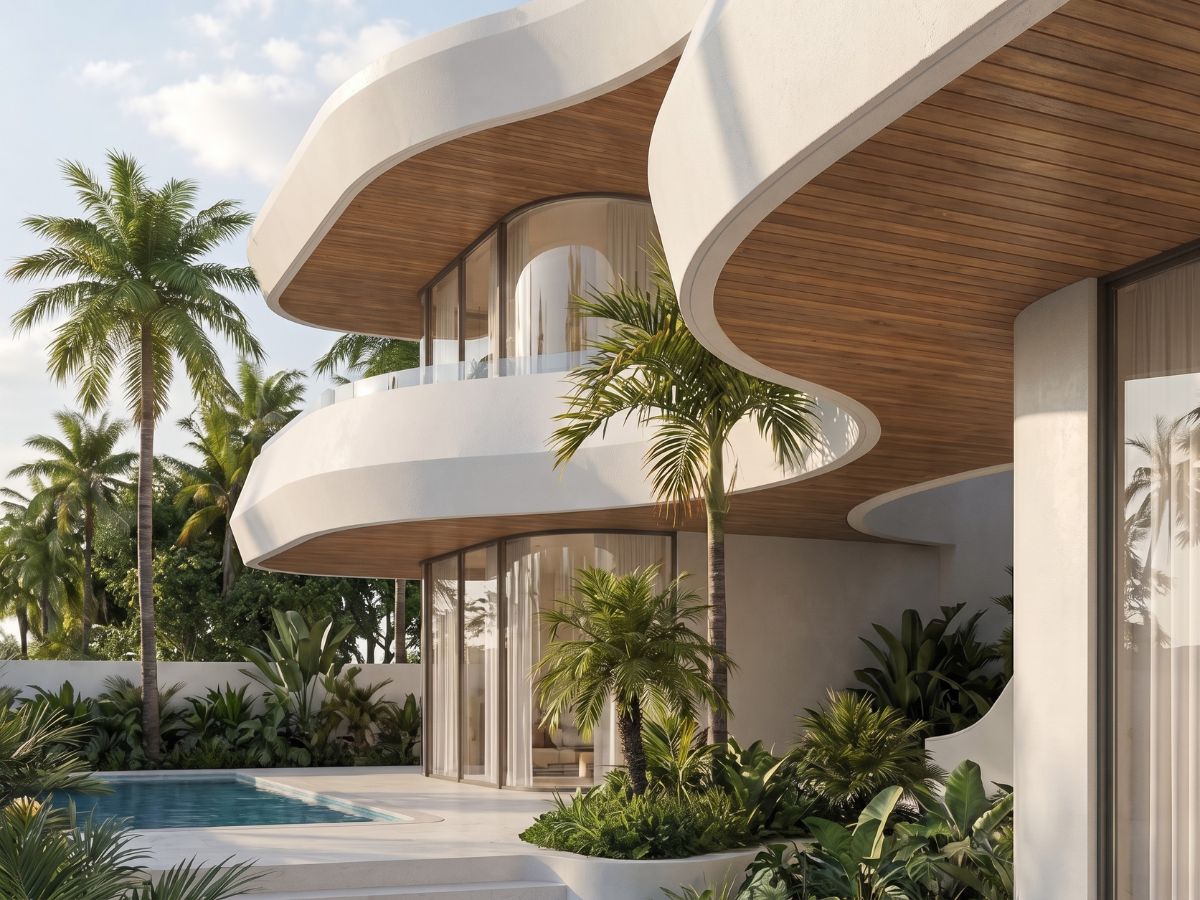
In a contemporary interpretation, the façade can be simplified through clean lines, staggered volumes and a controlled combination of mineral finishes, wood and vegetation.
Rather than simply replicating a traditional building, the aim should be to adapt its principles: sun protection, integration into the landscape, formal simplicity and continuity with outdoor spaces.
Terraces, hotels and dining areas
On terraces, shades of white, beige and ochre help to reflect light and create welcoming atmospheres. Vegetation, hard-wearing textiles and shaded areas allow the outdoors to become another room.
In hotels and restaurants, the mediterranean style can become a brand experience. The reception, guest rooms, bathrooms, bars and communal areas should share a common design language without becoming repetitive.
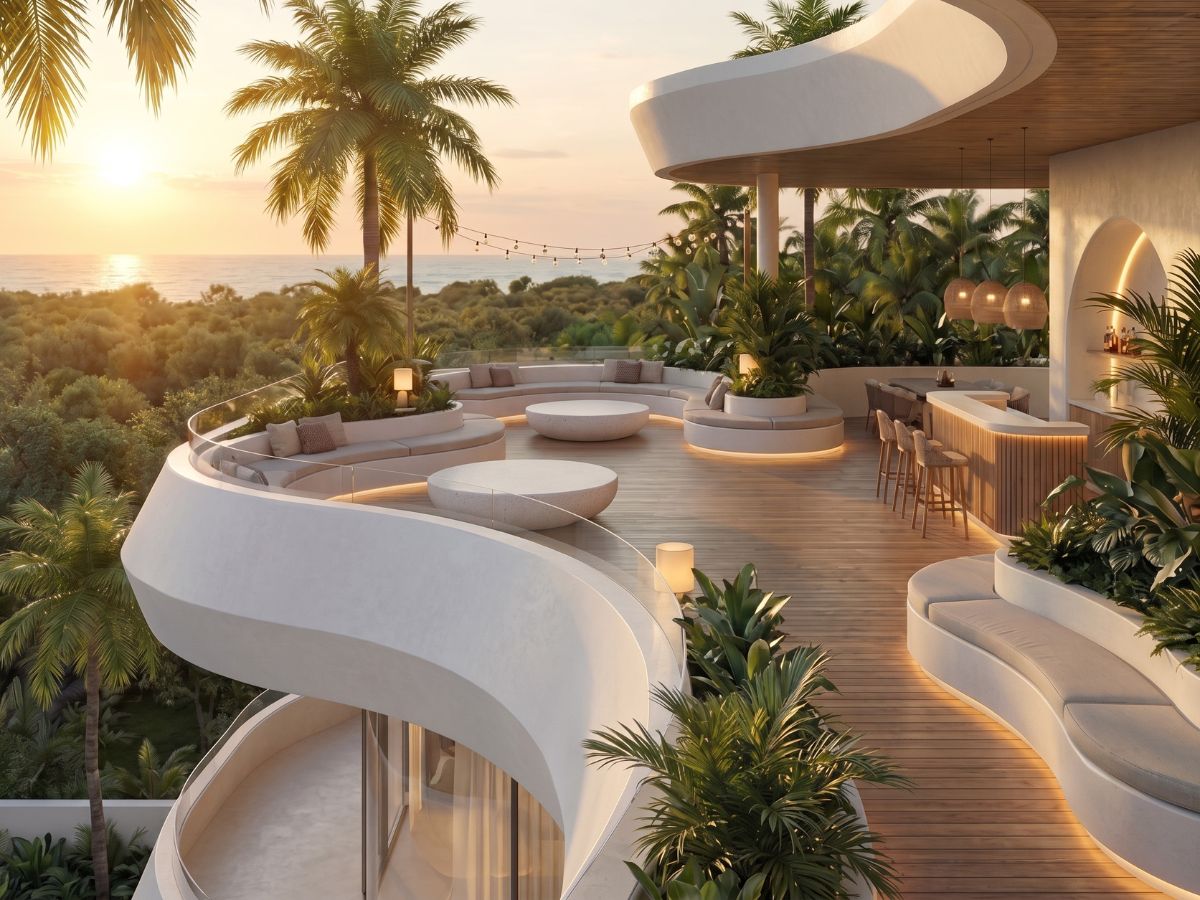
Textured cladding, curved counters, built-in benches and colour palettes inspired by the local landscape help to create recognisable spaces that are connected to their surroundings. In addition to aesthetics, these projects must meet requirements for durability, maintenance, installation and intensive use.
Contemporary surfaces for a mediterranean interior
The choice of surfaces is crucial for bringing the mediterranean character to a contemporary project. These should bring light, texture and a natural feel, whilst also meeting the requirements of each application and its anticipated level of use. Krion® LUX solutions enable the creation of worktops, bathrooms, furniture and bespoke elements in homes, hotels, restaurants and commercial spaces.
Seamless worktops and islands
Krion® Solid Surface allows for the creation of worktops, islands, bars and work surfaces with visually imperceptible joints. This continuity fits particularly well with the modern mediterranean style, which favours simple forms and a clean, uncluttered sense of space.
Its versatility allows for the integration of sinks, the seamless handling of joints and the creation of bespoke pieces. Furthermore, it is a non-porous material that is easy to clean and repair – qualities that are particularly important in domestic kitchens, restaurant counters and high-traffic areas.
Washbasins, baths and built-in units
Krion® Solid Surface allows you to create washbasins, worktops and built-in baths with virtually invisible joints and a seamless aesthetic. Its low porosity prevents the growth of bacteria and makes cleaning easier, making it a particularly suitable solution for residential bathrooms, hotels and high-traffic areas.
Curves, benches and bespoke elements
Curved forms are one of the clearest links between traditional mediterranean architecture and contemporary interior design. With Krion® Solid Surface, it is possible to create curved forms, benches, bars, counters, islands, cladding and bespoke pieces tailored to the project’s identity.
This capability allows for the creation of elements that appear to form part of the architecture itself. A bench can extend to become a ledge; an island can have softly rounded edges; and a counter can guide the flow of movement within a hotel or commercial space.
The value of customisation lies not merely in producing an eye-catching form. The solution must also address the flow of movement, maintenance, usage and the scale of the project. For this reason, collaboration between designers, fabricators and technical teams is essential to transform the initial idea into a viable and durable piece.
Design a mediterranean space with Krion
Designing a mediterranean space with Krion is not simply a matter of choosing a light colour or a stone-inspired finish. The material’s properties allow the principles of this aesthetic—light, continuity, simplicity and organic forms—to be translated into contemporary solutions tailored to each project.
Krion® Solid Surface can be cut, joined and thermoformed to create continuous, curved surfaces and bespoke elements. This makes it possible to create everything from worktops and kitchen islands to washbasins, benches, bar counters, furniture or cladding integrated into the architecture. The rich variety of its shades, textures and finishes makes it extremely easy to integrate. This allows the material to be combined naturally with wood, ceramics, plant fibres or other classic elements of the mediterranean style.
This creative freedom is complemented by functional advantages such as its low porosity, ease of cleaning, reparability and durability. Visually imperceptible joints help to minimise interruptions in the design and create more serene environments, whilst thermoforming allows for the introduction of the curves and smooth transitions characteristic of the modern mediterranean style.
These features make it possible to maintain a consistent design language across different areas of a project. A surface used in the kitchen can be continued into a bar counter, a washbasin or a piece of furniture, creating a coherent identity in homes, hotels, restaurants and commercial spaces.
To support professionals throughout this process, Krion offers the KRION® A&D programme, aimed at architects, interior designers and designers. The programme offers technical information, training, talks and personalised support to analyse the aesthetic, functional, sustainable and economic possibilities of the materials in specific projects.
The A&D team also provides technical and financial advice and offers support for implementing projects using BIM tools. This enables professionals to assess the feasibility of a solution, select the appropriate material and finish, and resolve technical issues from the earliest stages of design.
Frequently asked questions about the mediterranean style
What is the mediterranean style like?
The mediterranean style is light, natural and relaxed. It typically combines light colours, textured materials, plant fibres, simple shapes and a strong connection between indoors and outdoors.
It is not always necessary to use blue or maritime motifs. It can also be created using warm whites, sandy shades, terracotta, olive greens, wood, stone and seamless surfaces.
What are the main mediterranean colours?
The most common colours are white, cream, beige, sand, terracotta, blue and olive green. Mineral greys, stone tones and wood-inspired shades can also be incorporated.
The choice will depend on natural light, the orientation and the use of the space. In small or dimly lit rooms, it’s best to prioritise light base colours and reserve the more intense shades for specific details.
Can it be used in a small flat?
Yes. To apply the mediterranean style to a small flat, it’s advisable to use a light colour palette, visually light furniture, curtains that let light through and few decorative elements.
It also helps to integrate furniture and surfaces, minimise contrasts and concentrate textures in specific areas, such as a wall, the kitchen or the headboard in the bedroom. In this way, the space retains its character without feeling cluttered.
Which surface should you choose for a mediterranean-style kitchen or bathroom?
The choice depends on the application, the desired finish and maintenance requirements.
Krion® LUX is a suitable option for demanding applications such as worktops, islands, built-in washbasins and curved elements. This is made possible by its unique technical properties, such as low porosity, ease of cleaning and great versatility, with no visible joints.
To introduce texture to walls, ceilings or furniture, Fitwall® allows you to recreate finishes inspired by stone, wood, concrete or clay. The most suitable solution will be one that maintains the mediterranean aesthetic whilst also meeting the practical needs of the space.