Round houses: creativity without beginning or end
04/09/2024 [Updated on 21/10/2025]
The circle has no beginning and no end and all its points are equidistant from the centre. This geometric shape is the primordial symbol that contains everything.
Always in search of the surprising, architecture strives to achieve pleasant and unexpected round shapes. An example of this is the construction of round house projects or those incorporating circular shapes. Unique homes that not only capture the imagination with their unconventional design, but also offer a variety of practical and aesthetic benefits.
We explain the different types and styles of round houses, present real examples, and tell you about the advantages of living in a round house.
Our materials developed in Krion make it possible to create this type of house, providing sustainable, customisable solutions and, above all, highly responsive to the requirements of the most demanding projects.
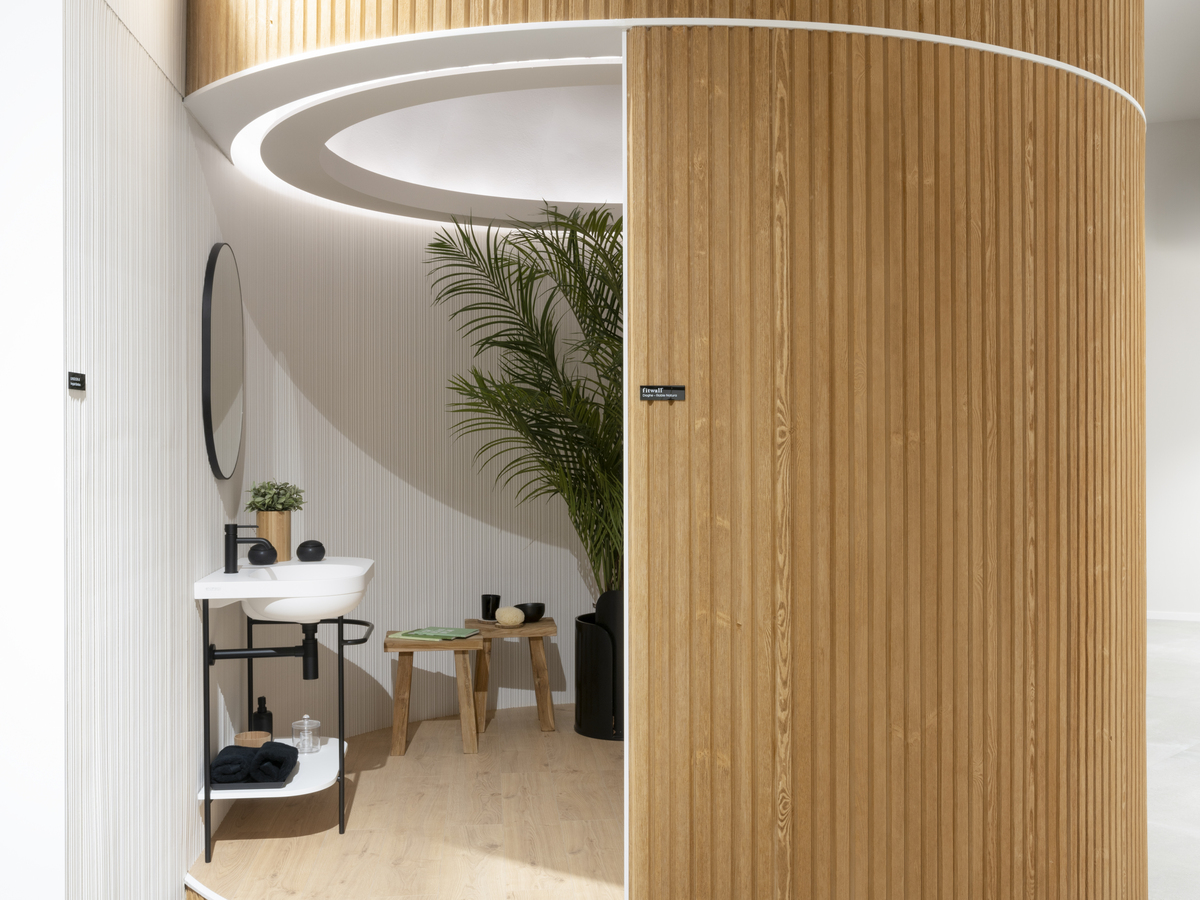
Photography: Cloé Chapelier and Tanguy Chausson.
Porcelanosa Grupo project: Le Tour du Capitole (Toulouse, France) by architect CHRISTOPHE BENICHOU.
Solutions by the firm KRION®.
Round houses are architectural structures with a circular or curved floor plan. Several cultures throughout history have opted for them, from ancient Mongolian yurts to modern geodesic domes. Today, these houses are seen as a sustainable and aesthetically appealing option for those looking for a home with a difference and personality.
-
Unique design and connection to nature
Round houses stand out for their unique aesthetic that resonates with Feng Shui, avoiding sharp edges to create a harmonious environment. This design appeals to those who value creativity and integration with nature in their home.
-
Spatial efficiency
Its compact form maximises the use of interior space, ideal in areas with limited land. Large windows and doors improve the connection to the outside and increase the entry of natural light.
-
Energy Efficiency
The smaller exposed surface area also reduces interaction with the climate, optimising energy consumption to maintain comfortable temperatures. The aerodynamic shape also minimises air infiltration.
-
Economy
Round houses require less materials and labour, reducing construction costs and project time. They use up to 20% less materials than rectangular houses, which means lower maintenance costs.
-
Greater structural strength
Their aerodynamic design better distributes forces, reducing the risk of structural damage from natural disasters. Curved roofs deflect strong winds, providing greater resistance to hurricanes and tsunamis.
-
Better acoustics
The circular shape softens interior sounds and reduces exterior noise, creating a calm and serene environment. This makes round houses ideal for relaxing, socialising and enjoying music.
Examples of round houses
Not only do we find the circular shape in the floor plan, but there are also many projects that incorporate circular domes. Either to fit the orography of a terrain, such as these projects built in caves, or because an accentuated and elevated effect is sought through the design of curved ceilings or walls.

Photography: Rafael López de la Cerda.
Porcelanosa Grupo Project: Photocatalytic Cave (Lomas de Chapultepec, Mexico)
Solutions by Porcelanosa, KRION® and Noken.
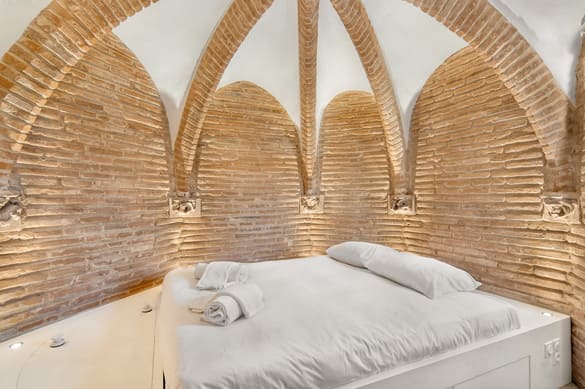
Photography: Cloé Chapelier and Tanguy Chausson.
Porcelanosa Group project: Le Tour du Capitole (Toulouse, France) by architect CHRISTOPHE BENICHOU.
Solutions by the firm KRION®.
The round design itself is energy efficient, as it allows for an even distribution of heat.
The clean lines and open spaces are ideal for maximising the feeling of spaciousness in a circular floor plan.
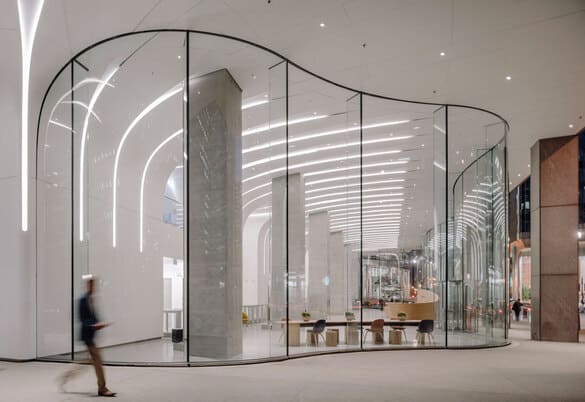
Photography: IMAGEN SUBLIMINAL
Porcelanosa Group project: Chicago Mercantile Exchange (Chicago, USA) by Krueck + Sexton Architects.
Solutions by the firms Porcelanosa Grupo, KRION® and Butech.
Furniture in a round house
In a conventional house with right angles, it is easier to fit standard furniture, as it can be easily glued to the walls. However, in a house with curved walls, the challenge is greater. The key to decorating rounded spaces is to embrace the curve, exploit it and highlight it. When arranging furniture, there are two main options: place it in the centre of the space, creating a floating island surrounded by curves, or design bespoke furniture to suit the existing curves.
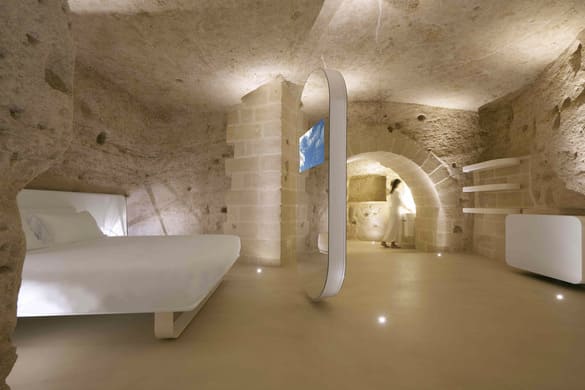
Photograph: Jürgen Eheim.
Porcelanosa Group project: Aquatio Cave Luxury Hotel & Spa (Matera, Italy) by architect Simone Micheli.
Solutions by Porcelanosa, Porcelanosa Grupo and KRION®.
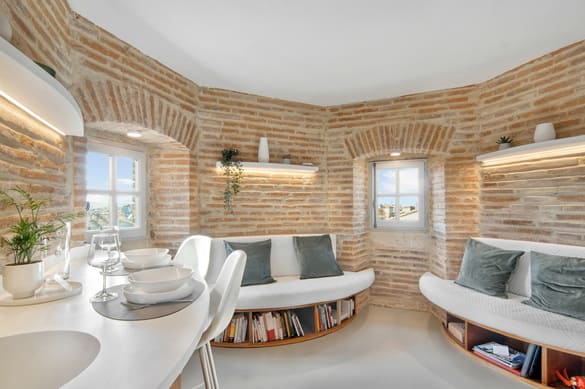
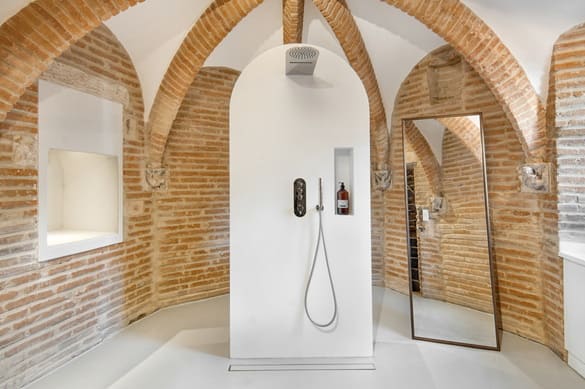
Photography: Cloé Chapelier and Tanguy Chausson.
Porcelanosa Grupo project: Le Tour du Capitole (Toulouse, France) by architect CHRISTOPHE BENICHOU.
Solutions by the firm KRION®.
Although the first option requires more space, made-to-measure furniture, although it requires the help of a designer, allows you to live in a unique and inspiring home. A sure-fire trick is to opt for sculptural pieces of furniture that further enhance the play of curves.
If you're looking for a way to set yourself apart and transform your home into a truly inspiring space, explore our decorative panel solutions and discover how Krion® can bring your vision to life. Get to know our materials and take the first step towards a life in a round, unique and sustainable home.